
Apartment complex managers’ junk removal is the planned removal of unwanted items from units and shared spaces to prepare properties for their next use. This 2026 guide explains junk removal for apartment complex managers, where tenant-property decisions, building access, and multiple work locations require a clear job scope before you connect with independent providers.
TL;DR
- Expelled connects apartment complex managers with independent providers for junk removal and property cleanouts; it does not perform removal.
- Junk removal for apartment complex managers starts with removal authorization, an item inventory, and building-access instructions.
- Compare independent providers against the same written scope, including exclusions, disposal arrangements, and completion evidence.
- Keep tenant-property decisions separate from hauling instructions; confirm authority before releasing items for removal.
Why junk removal matters for apartment complex managers
Apartment junk removal combines several jobs that need different instructions: clearing a vacant unit, removing furniture from a shared area, and collecting discarded items near a waste enclosure. A truck location alone does not describe any of them adequately. Your provider needs to know what belongs in the load and how to reach it.
The broader junk removal for property managers guide covers property-management cleanouts. Apartment complexes also need unit-specific authorization, resident-access protection, and coordination across occupied buildings.
For your 2026 operating plan, separate removal decisions from removal logistics. Decide which items are authorized for removal first, then document access and compare providers. This prevents a vague cleanout request from becoming an instruction to remove everything visible.
Your objective is a verified handoff to the next task, whether that means maintenance, cleaning, inspection, or another authorized use. Junk removal alone does not establish that a unit is ready for occupancy.
How to organize apartment-complex junk removal
1. Confirm your authority to remove each item
Start with your lease documents, property procedures, and applicable local requirements. Record who approved removal and which items that approval covers. Do not treat an apparently vacant unit as proof that every remaining possession can be discarded.
For an eviction, abandoned-property situation, or disputed ownership, obtain the required legal direction before arranging hauling. The independent provider receives your removal instructions; the provider is not the decision-maker on tenant ownership or notice requirements.
Create 1 written job brief per authorized scope for your 2026 records. Keep disputed items out of that scope rather than relying on a verbal warning at pickup. If several units share a booking, identify each unit separately within the brief so crews do not transfer instructions between locations.
- Record the approving manager and approval date.
- Identify the unit, building, or shared-space location.
- List authorized items and items that must remain.
- Flag disputed possessions for separate handling.
- Keep authorization records with the work order.
2. Document the load and access route
Use a phone camera and a simple inventory before requesting provider responses. Describe the actual objects: a sofa, loose household items, a refrigerator, or bagged contents. Avoid labels such as small cleanout when the reader cannot see the load.
Use 3 photo views as a documentation checklist: an item overview, the access route, and the removal boundary. These views show both the work and its limits. Add close-ups for items whose handling requirements are not visible in a room-wide photograph.
Document stairs, elevators, doorways, loading restrictions, and the distance between the items and the intended vehicle location. State whether elevator access requires coordination with building staff. Do not promise that a vehicle can park somewhere until you have confirmed permission.
- Item overview: show everything included in the request.
- Access route: show the path from items to loading location.
- Removal boundary: show items or areas excluded from the job.
- List bulky items separately from loose contents.
- Identify access restrictions and the person who controls entry.
!Three documentation views: item overview, access route, and removal boundary
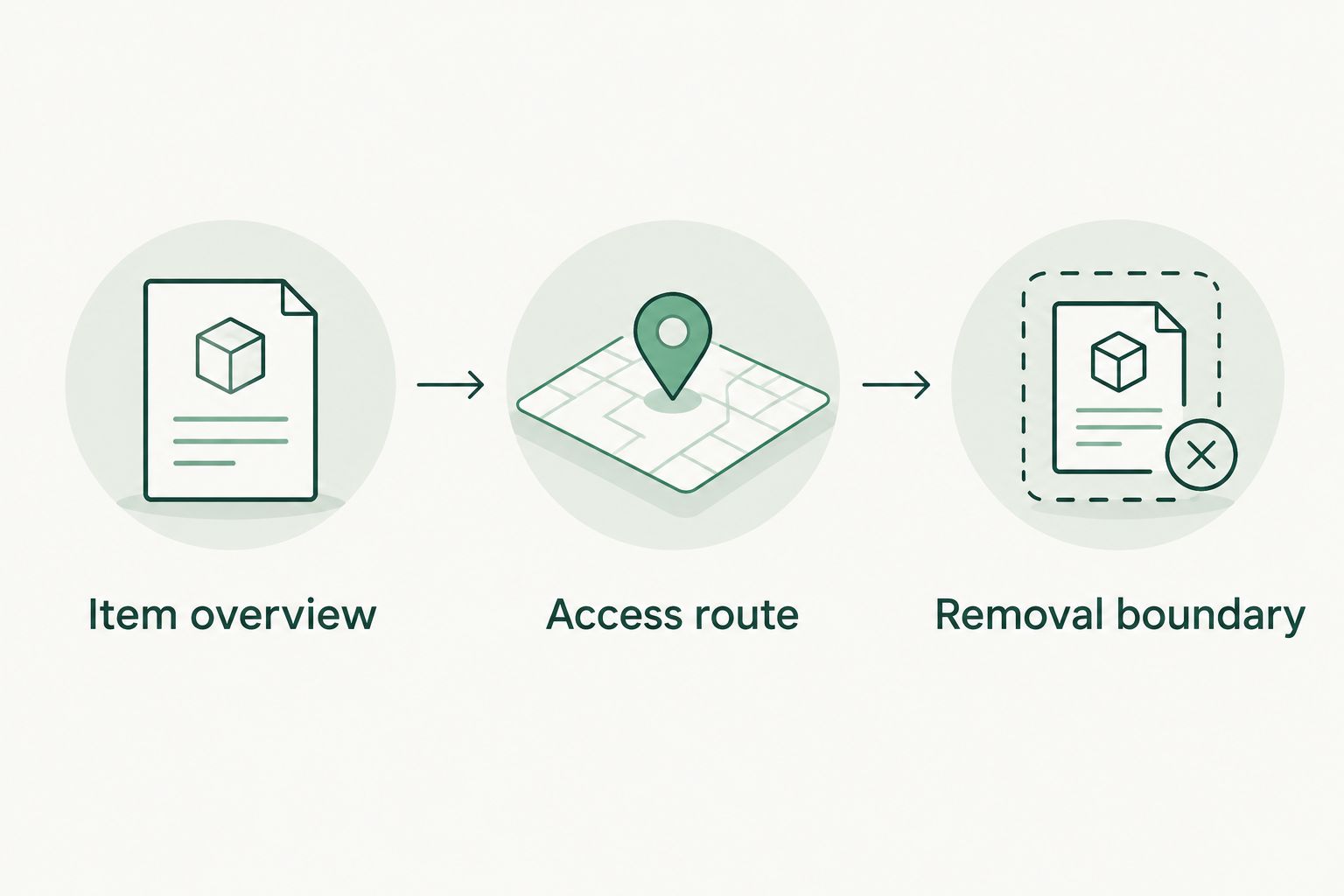
*Document what leaves, how it leaves, and what stays.*
3. Choose how to find independent providers
The manual route is to contact independent providers directly and send each the same brief. You can also ask your existing waste-service contact which bulky-item services fall within your agreement. Confirm the scope rather than assuming ordinary collection covers unit cleanouts.
Expelled is a junk removal marketplace that connects property professionals with independent providers offering cleanouts, junk removal, and hauling. It gives you a marketplace route for finding and connecting with providers instead of relying only on separate searches.
Expelled is best for apartment managers who want to connect with independent junk removal providers through a marketplace. Expelled does not perform the cleanout itself; you still need to confirm the provider’s scope, coverage, scheduling, and terms. Finding a provider is not the same as confirming a booking.
- Send the same inventory and photographs to each provider.
- Ask whether the provider serves the property’s location.
- Identify unit cleanouts and shared-area pickups separately.
- Confirm who will communicate with your onsite contact.
- Record provider responses beside the original brief.
4. Compare written scope before choosing a provider
Read each response against the work you described. A response that says junk removal included is not sufficiently specific when the job contains appliances, stairs, disputed items, or multiple collection points. Ask for those details in writing.
Compare included labor, accepted materials, loading arrangements, disposal responsibilities, and exclusions. Request insurance documentation appropriate to your property’s vendor requirements, and verify it through your normal approval process. Do not treat a marketplace connection or a provider’s business name as evidence of insurance.
Use 2 written confirmations before booking: the provider’s accepted scope and your property’s access approval. This is a process recommendation, not a promise about provider performance. It creates a clear record of what the provider agreed to remove and what the building agreed to permit.
- Match the response to your item list and photographs.
- Confirm whether carrying, loading, and hauling are included.
- Ask which materials the provider will not accept.
- Specify the disposal documentation you require.
- Resolve differences in scope before approving the job.
5. Coordinate access without blocking residents
Prepare the building instructions yourself before passing them to the provider. Identify the authorized entry point, loading location, onsite contact, and any building-specific access procedures. Share only the access information needed for the work.
For your 2026 turnover schedule, distinguish your requested work window from the provider’s confirmed appointment. Do not schedule dependent work against an unconfirmed request. If several contractors need the same doorway or elevator, assign their access deliberately rather than leaving them to negotiate onsite.
Keep emergency exits and resident routes clear. Decide where items can be staged, if staging is permitted, and who will monitor the area. A common hallway is not automatically an approved holding area for furniture or bags.
- Confirm the appointment directly with the provider.
- Give residents notices required by your building procedures.
- Arrange elevator or loading access where required.
- Name a contact who can resolve scope questions.
- Explain which routes and spaces must remain unobstructed.
6. Verify removal and close the work order
Walk the authorized area after removal, or arrange for a designated onsite contact to do it. Compare the result with the original inventory and removal boundary. Confirm that excluded items remain and that the requested items have been removed.
Record remaining items, access damage, and any work that requires another service. Do not mark cleaning, repairs, pest treatment, or restoration complete merely because a hauling job is finished. Those tasks need their own scope and verification.
Keep the provider’s invoice, completion photographs, and any requested disposal records together. For repeat work, note what changed between the initial brief and the final scope. That record gives your next request a better starting point without assuming that every unit produces the same load.
- Photograph the cleared areas from useful comparison angles.
- Check excluded items against the original instructions.
- Record unresolved items and assign a follow-up owner.
- Separate hauling completion from maintenance completion.
- Close the work order only after verifying its scope.
Connect with independent providers
Use your item inventory and access instructions to discuss a property cleanout with independent providers.
[Explore the marketplace](https://expelled.online/)
Compare apartment-complex removal options
Choose the route that matches the job, not just the contact you already have. Existing waste arrangements, direct provider searches, and marketplace connections serve different purposes. Confirm what each route includes before sending removal instructions.
| Option | Best for | Practical advantage | Key limitation | |---|---|---|---| | Existing waste-service arrangement | Items explicitly covered by your property’s agreement | Starts with an established service contact | Unit entry, carrying, or bulky-item handling must be confirmed separately | | Direct independent-provider search | Managers who want to contact and assess providers themselves | Lets you discuss the job directly with each provider | You organize the search and reconcile separate responses | | Expelled junk removal marketplace | Managers who want a marketplace connection to independent providers | Connects property professionals with cleanout, junk removal, and hauling providers | The marketplace does not perform removal or establish provider availability | | In-house collection and staging | Authorized items your staff can safely move under property procedures | Keeps initial sorting and staging under onsite supervision | Staging does not resolve hauling, disposal, or specialist handling |
You can combine routes without combining responsibilities. For example, staff can identify authorized items while an independent provider handles the agreed removal. Document where the staff task ends and the provider’s task begins.
Common mistakes apartment complex managers make
Treating a vacant unit as blanket removal authorization
Vacancy and permission to dispose of possessions are separate questions. Keep tenant-property decisions outside the hauling scope until the authorized decision-maker resolves them. A provider should receive a specific removal list, not an instruction to decide what looks abandoned.
Combining scattered pickups without naming each location
A request for furniture removal across the property needs building and pickup-point details. Otherwise, the provider cannot assess the actual route from the request. List each location and identify which items belong to it.
Assuming every unwanted material belongs in a junk load
Unknown liquids, chemicals, sharps, and contaminated materials require separate assessment and appropriate handling. Tell the provider what you found before booking. Do not conceal uncertain materials inside bags or expect an ordinary hauling request to cover them.
Comparing responses that describe different jobs
One provider’s response might cover staged furniture while another includes carrying items from upper-floor units. Those are different scopes. For your 2026 vendor records, compare the accepted item list, access conditions, and exclusions before selecting a provider.
Closing the turnover ticket when hauling ends
An empty room still needs the checks assigned to maintenance, cleaning, and inspection. Close the junk-removal task separately. Keep the overall turnover record open until each responsible party verifies its own work.
FAQ
What’s the best way to arrange junk removal for an apartment complex?
Start with an authorized item list, photographs, and building-access instructions, then compare independent providers against that same scope. Confirm accepted materials, exclusions, and the appointment directly with the chosen provider.
Does Expelled perform apartment cleanouts?
Expelled does not perform apartment cleanouts itself. It is an online marketplace that connects property professionals, homeowners, and businesses with independent providers offering property cleanouts, junk removal, and hauling.
Can I remove belongings left behind by a tenant?
Confirm your legal authority before removing belongings left behind by a tenant. Follow applicable requirements and obtain legal direction for disputed ownership, abandonment, or eviction-related possessions before issuing hauling instructions.
What should I send a junk removal provider before booking?
Send an item inventory, photographs, authorized removal boundaries, and access instructions. Include stairs, elevator arrangements, loading restrictions, and the contact responsible for approving changes.
Can one booking cover several apartment buildings?
Ask the provider to confirm a scope that names every building and pickup location. A combined request needs item lists and access details for each location, plus written agreement on what the booking includes.
Is junk removal the same as a complete apartment turnover?
Junk removal is not a complete apartment turnover. Cleaning, repairs, inspections, pest treatment, and other required work need separate instructions and verification.
What should I check after the provider finishes?
Compare the cleared area with the authorized inventory and confirm that excluded items remain. Record remaining work, retain completion photographs, and collect any disposal documentation required by your property procedures.
One last thing
Make the keep list as clear as the removal list. In your 2026 job brief, name fixtures, appliances, stored supplies, and personal items that must remain. A photograph of a full room shows what exists; it does not tell an independent provider what you have authorized them to take.