
Construction debris removal in 2026 requires a job-specific quote based on the materials, quantity, loading work, access, and disposal requirements. Confirm whether the quote includes carrying debris out, loading it, hauling it away, and disposal; a hauling-only quote does not describe the same work as a full removal job.
TL;DR
- How much does construction debris removal cost? Compare written quotes for the same materials, loading work, and disposal scope.
- Expelled connects homeowners, property professionals, and businesses with independent providers for junk removal and property cleanouts.
- Describe heavy debris separately from bulky debris, and confirm exclusions before accepting a construction debris removal quote.
Why this matters
Compare the work included before comparing the total. A pile beside a driveway and an identical pile upstairs require different handling. If your job description leaves out the stairs, the provider cannot assess the same scope you have in mind.
For a 2026 renovation, your first task is to distinguish removal from demolition. Removing loose drywall is not the same request as taking drywall off the walls. Use the construction debris removal provider guide alongside the checklist below when deciding what to ask a provider.
A useful estimate identifies what leaves the property, where it starts, and who handles each part of the work. That written scope gives you a basis for comparing providers without assuming their services are identical.
How much does construction debris removal cost in 2026?
Construction debris removal depends on the specific job rather than a single amount that applies to every property. Request a written estimate that separates the work included from the conditions that trigger a revised quote.
Use this breakdown to check an estimate:
| Part of the job | What to describe | What to confirm | |---|---|---| | Materials | Wood, drywall, tile, concrete, metal, packaging, or mixed debris | Which materials the provider accepts | | Quantity | Pile dimensions, photographs, and separate heavy-material piles | How the provider measures the load | | Loading | Whether debris is loose, bagged, stacked, or still inside | Who carries and loads the material | | Access | Stairs, gates, elevators, parking, and carrying distance | Which access conditions the estimate assumes | | Hauling and disposal | The debris that needs to leave the property | Whether transportation and disposal are included | | Exclusions | Demolition, sweeping, special handling, or additional debris | What requires separate approval |
A complete quote describes both the debris and the work. An estimate based only on a photograph of the pile leaves access and handling unresolved.
Ask how the provider handles a scope change. For example, establish what happens if you uncover more debris before collection, or if material underneath the visible pile differs from your description. Get the approval process in writing before work starts.
Choose the removal approach that matches your job
You can compare provider-loaded removal, a dumpster you load, and hauling the debris yourself. These approaches assign different responsibilities to you, so compare the work as well as the estimate.
| Approach | Best for | Main advantage | Main limitation | |---|---|---|---| | Provider-loaded removal | People who want someone else to carry and load loose debris | Loading and hauling can be included in one agreed scope | You must confirm accepted materials, access, and exclusions | | Dumpster rental | Projects where you can load debris as work progresses | Debris can be collected in a designated container | You handle loading and must follow placement and material rules | | Self-hauling | People with suitable transport who can handle loading and disposal | You control when you load and transport the material | You take responsibility for safe loading and disposal-site acceptance |
Provider-loaded removal is best for reducing your own carrying and loading work. Verify those tasks are included rather than assuming that the word removal covers everything.
Dumpster rental is best for collecting debris while work continues. Check container placement, loading restrictions, and collection arrangements before choosing it. A container does not solve the task of moving debris out of the building.
Self-hauling is best for people equipped to handle transport and disposal themselves. Confirm the receiving facility accepts your materials before loading a vehicle. Do not treat vehicle space as proof that the vehicle can safely carry the load.
Why construction debris removal estimates vary
These factors explain why estimates for apparently similar piles need closer inspection. Include each one in your request rather than waiting for the provider to discover it on arrival.
- Material type: Identify concrete, brick, tile, drywall, wood, metal, and mixed debris separately. Ask about any material you cannot confidently identify.
- Quantity and weight: A bulky pile and a dense pile create different handling and transport requirements. Describe both dimensions and contents.
- Loading work: State whether debris is ready for pickup or needs to be carried from rooms, basements, or upper floors. Keep demolition separate from loose-debris removal.
- Property access: Explain stairs, narrow gates, elevator rules, parking restrictions, and the route from the pile to the loading area.
- Disposal requirements: Ask which materials are accepted and whether sorting or special handling is necessary. Do not assume every item can travel in the same load.
- Scope and scheduling: Describe whether the job is a single collection or part of ongoing construction. Confirm arrangements directly rather than assuming a provider can accommodate your preferred date.
For your 2026 project, use the same description when requesting each estimate. Changing the materials or loading assumptions between requests makes the resulting quotes harder to compare.
How to describe your debris before requesting a quote
A clear request lets a provider assess the work instead of guessing what sits outside the photograph. Follow this sequence before contacting providers.
1. List materials
Write down the visible material types and separate heavy debris from bulky debris in your description. Mention loose nails, sharp edges, broken glass, and other handling concerns you can see. Do not open or disturb suspect material just to identify it.
2. Estimate quantity
Measure the approximate length, width, and height of each pile. State the units and explain whether the pile is loose, bagged, or stacked. Photos help show its shape, but they do not replace a description of what is inside.
3. Describe access
Photograph the route from the debris to the proposed loading area. Include stairs, doorways, gates, and parking constraints. If a property manager controls access, identify who will arrange entry and any building requirements.
4. Define scope
Say whether you need carrying, loading, hauling, disposal, or cleanup after collection. Identify materials and fixtures that must remain. Keep a clear distinction between removing loose debris and dismantling anything attached to the building.
5. Confirm terms
Ask the provider to confirm the included work, excluded materials, and conditions for revising the estimate. Agree on who can approve changes. Keep that written record with the photographs you supplied.
!Five steps for describing construction debris and confirming a removal scope
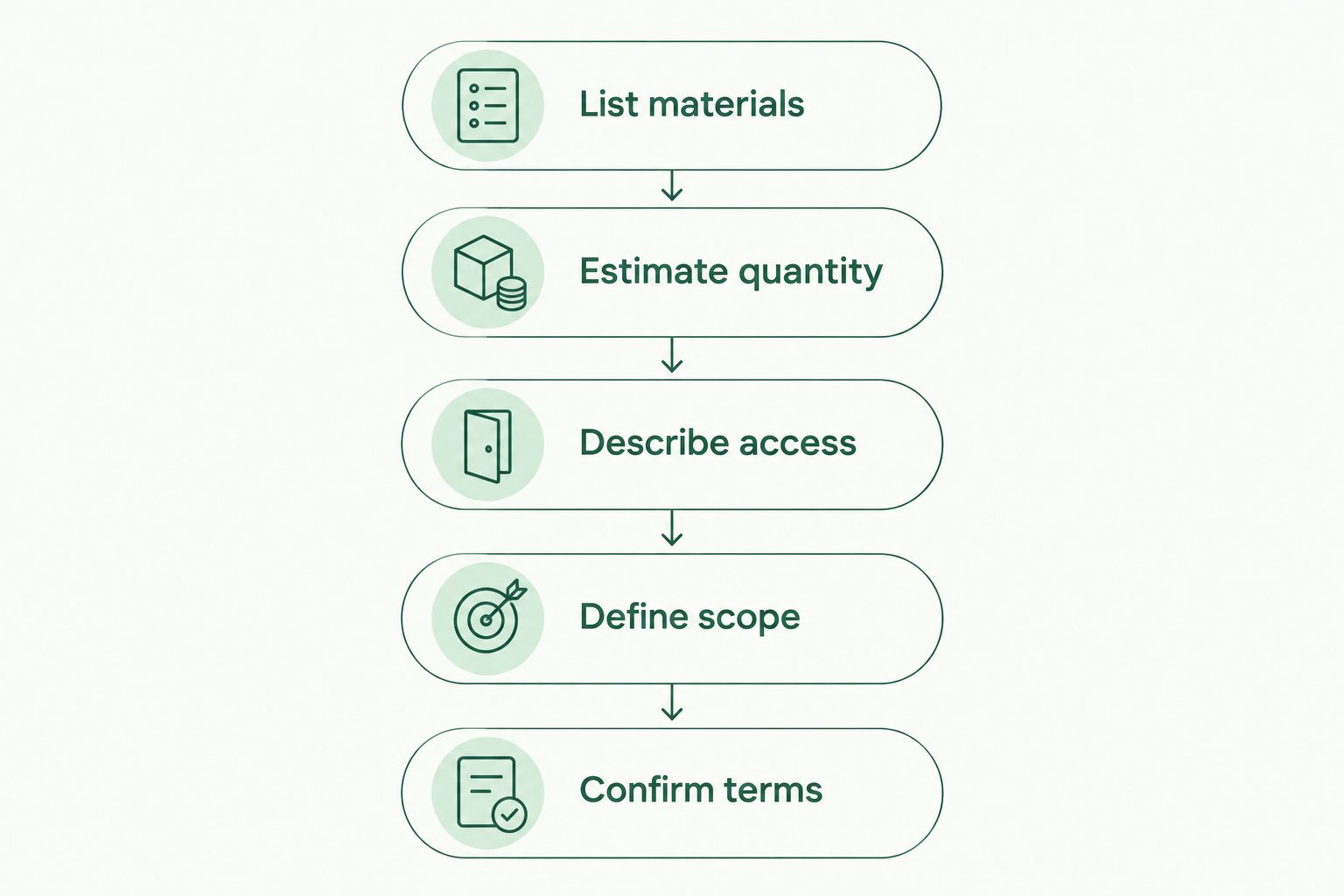
*Give each provider the same materials, quantity, access details, and scope.*
Keep your request factual. Instead of calling a load small or easy, describe its dimensions, contents, location, and loading route. Those details give the provider something concrete to assess.
How do you measure construction debris for an estimate?
Measure a roughly rectangular pile in feet, then multiply length by width by height to estimate cubic feet. Divide cubic feet by 27 to express the same volume in cubic yards. Irregular piles and gaps between materials make this an approximation, not a confirmed load measurement.
One cubic yard equals 27 cubic feet: a space measuring 3 feet long, 3 feet wide, and 3 feet high. This describes volume, not weight, so it does not establish what a vehicle or container can carry.
For weight terminology, a US short ton equals 2,000 pounds. Do not convert a debris pile's volume into weight without knowing the material and having a sound basis for that conversion. Mixed debris does not have a single reliable weight per cubic yard.
Ask whether the provider assesses your job by volume, weight, labor, or a combined scope. Record the measurement basis next to the estimate so you do not compare unlike descriptions.
Can you reduce removal work before collection?
You can make the scope clearer by separating materials, identifying items that stay, and keeping the access route clear. Ask the provider before moving heavy or awkward debris; moving it twice creates unnecessary handling.
If you are considering carrying material outside yourself, confirm where the provider wants it placed. Do not block sidewalks, exits, shared access, or loading areas. Check applicable property and local rules before staging debris outside.
For a 2026 renovation with continuing demolition, explain that more material is expected. Ask whether the estimate covers only the photographed pile or an agreed later scope. Avoid presenting an unfinished debris quantity as a final load.
Does construction debris removal include demolition and sweeping?
Construction debris removal includes only the tasks agreed with the provider; demolition and sweeping need explicit confirmation. Ask separately about detaching fixtures, breaking down materials, carrying debris, and the condition in which the work area will be left.
Use a specific handover description. For example, distinguish between removing the identified pile and removing scattered fragments from the surrounding floor. Do not assume either includes construction dust cleanup.
How do you compare independent providers?
Compare accepted materials, included labor, disposal arrangements, access assumptions, and the process for approving changes. Then check that each estimate refers to the same job description.
Expelled is best for homeowners, property professionals, and businesses seeking connections with independent cleanout and junk removal providers. You can use Expelled to connect with independent providers; the marketplace does not perform the cleanout itself.
The convenience is finding a connection for property-related removal work. The limitation is that you still need to confirm the provider's suitability, terms, and arrangements directly. Expelled does not replace a written agreement about your particular debris load.
Before accepting an estimate, ask:
- Does this cover every material in the description and photographs?
- Who carries the debris from its current location?
- Are hauling and disposal included in the agreed scope?
- Which items or tasks are excluded?
- What happens if the actual load differs from the description?
- Who approves additional work before it begins?
Keep the answers together. A clear written scope is more useful than assurances that the provider will handle everything.
FAQ
How much does construction debris removal cost in 2026?
Construction debris removal in 2026 requires a job-specific quote based on materials, quantity, loading work, access, and disposal requirements. Compare estimates for the same written scope, including exclusions and the process for approving changes.
Is a dumpster better than hiring a debris removal provider?
A dumpster suits projects where you can load debris as work progresses; provider-loaded removal suits people who want carrying and loading included. Confirm material restrictions and responsibilities before choosing either approach.
Can concrete and wood go in the same debris load?
Confirm mixed-load acceptance with the provider before combining concrete and wood. Material handling and disposal requirements determine what the provider will accept together.
Does construction debris removal include carrying material downstairs?
Carrying material downstairs is included only when it is part of the agreed scope. Describe the stairs, debris location, and route to the loading area before requesting an estimate.
How many cubic feet are in a cubic yard of debris?
One cubic yard equals 27 cubic feet. That is a volume measurement, not a weight measurement, and does not establish a vehicle's safe carrying capacity.
Can I book removal before demolition is finished?
You can discuss removal arrangements before demolition is finished, but identify whether the collection covers existing debris or material still to be generated. Confirm scheduling and the final scope directly with the provider.
What should I do with suspected asbestos-containing debris?
Do not disturb suspected asbestos-containing debris or mix it into an ordinary removal load. Seek assessment and handling guidance from an appropriately qualified professional before arranging removal.
One last thing
Photograph what must stay, not just what must go. Renovation sites can contain reusable materials, retained fixtures, and waste in the same area. Mark the removal boundary in your job description and confirm it with the provider before loading begins.
For your 2026 job, send updated photographs if the pile changes after the estimate. A written scope is only useful when it still describes the debris waiting at the property.