
A hoarder cleanup in 2026 needs a property-specific quote based on what must be sorted, removed, cleaned, and handled separately. The total also depends on what the provider excludes: hauling belongings away does not mean the quote includes sanitation, pest treatment, or repairs.
TL;DR
- How much does a hoarder cleanup cost? Get a written scope separating sorting, junk removal, cleaning, and specialist work.
- Expelled connects homeowners, property professionals, and businesses with independent providers for property cleanouts, junk removal, and hauling.
- Compare exclusions and approval requirements, not just the quoted total.
- Disclose suspected contamination before requesting a provider assessment.
How much does a hoarder cleanup cost in 2026?
The useful number is a written quote for the actual property, not an estimate based only on the phrase hoarder cleanup. Describe the work first, then ask providers to identify what their proposed total covers. A quote for loading bagged rubbish is not comparable to a quote that includes sorting possessions throughout an occupied home.
Use this breakdown when reviewing an estimate. For provider-selection questions, see the guide to junk removal companies for hoarder cleanups.
| Work category | Best for | What to ask the provider | Main limitation | |---|---|---|---| | Sorting and separation | Properties where belongings still need decisions | Who identifies items to keep, remove, or review? | Requires decisions before removal can proceed | | Junk removal and hauling | Approved items ready to leave the property | Does the scope include carrying, loading, transport, and disposal? | Does not establish that cleaning is included | | Surface cleaning | Spaces that need cleaning after contents are removed | Which rooms, surfaces, and tasks are included? | Does not establish that concealed damage is addressed | | Specialist assessment or treatment | Suspected contamination, pests, or unsafe conditions | What assessment is needed, and who performs the work? | Can require a separate scope and provider |
Why this matters
A lower quote with substantial exclusions leaves you with unfinished work. A broader quote is only useful when it names the tasks your property actually needs. Your first job is to define the required condition at handover: contents removed, specified surfaces cleaned, or a property ready for a separately arranged inspection.
Do not treat these outcomes as interchangeable. An empty room can still need cleaning or repairs, and a cleared doorway does not establish that the whole property is safe to occupy.
Removal-only cleanout: define what leaves the property
Best for: properties where an authorized person has already identified the items for removal. A removal-only scope lets you ask focused questions about carrying, loading, transport, and disposal without mixing in undecided possessions or cleaning tasks.
List the rooms and storage areas included. Identify bulky objects, items in difficult locations, and anything that must remain untouched. Tell the provider whether belongings are loose, bagged, boxed, or mixed together; photographs should show those conditions rather than a cleared corner alone.
The benefit is a clearer boundary around the removal work. The limitation is equally important: removal-only service does not establish that someone will sort paperwork, find valuables, clean surfaces, or address contamination. Ask for those tasks explicitly if you need them.
Before accepting the quote, ask how the provider handles items discovered outside the original description. Require approval before expanding the removal area or taking additional belongings.
Sorting-led cleanout: establish who makes decisions
Best for: occupied homes, inherited properties, and other situations where belongings need review before disposal. A sorting-led scope separates decisions about possessions from the physical work of carrying them away.
Name the person authorized to approve disposal. If several people have an interest in the contents, resolve decision authority before the provider begins. Keep identification, medication, financial records, photographs, keys, and other designated possessions outside the removal area whenever that can be done safely.
The benefit is control over what stays and what leaves. The limitation is that unresolved decisions remain unresolved even when a removal crew arrives. Do not assume a provider will decide which documents matter or settle disagreements about ownership.
Ask whether sorting assistance is included, what it involves, and how uncertain items will be held for review. Put the answer in the written scope rather than relying on an informal conversation.
Removal plus cleaning: specify the finish standard
Best for: properties where you need both contents removal and clearly defined cleaning tasks. Request separate descriptions for each part of the job so you can see where hauling ends and cleaning begins.
Use task descriptions rather than phrases such as completely cleaned. For example, identify whether you want accessible floors cleaned, kitchen surfaces addressed, or a bathroom included. These are requested tasks, not assumed features of a cleanout service.
The benefit is a defined handover condition. The limitation is that cleaning accessible surfaces does not resolve structural damage or establish that concealed areas have been assessed. Ask what happens if removing contents reveals a condition outside the agreed work.
For a 2026 quote, record the date of the assessment and the conditions shown in the photographs. If the property changes before the job, send an update rather than expecting the original description to cover new contents or newly visible problems.
Specialist work: keep it separate from ordinary hauling
Best for: properties with suspected contamination, infestation, or conditions that need assessment before routine removal. Disclose what you have observed without trying to diagnose the property yourself.
Describe visible signs and their locations. Tell prospective providers about suspected sharps, animal waste, chemical containers, water damage, pests, or unstable piles. Ask whether those conditions fall within their work and what information they need before assessing the job.
The benefit of a separate scope is clarity about responsibilities and exclusions. The limitation is that a hauling quote alone does not confirm that specialist work has been assessed or arranged. Do not assume one provider accepts every material or performs every related service.
Do not move suspect materials just to improve the photographs. Take images only from a position you can access safely, and explain which areas you could not document.
Why hoarder cleanup quotes vary
The property description should address these factors. Each gives a provider information needed to define the job rather than guess at its scope.
- Contents and handling: Describe the items, how they are stored, and whether sorting is needed before removal. Include bulky furniture and loose materials, not just visible bags.
- Access: Identify stairs, elevators, narrow passages, locked areas, and the route between the contents and a loading location. Ask what access arrangements the provider requires.
- Condition of the space: Disclose suspected contamination, pests, water damage, or unstable contents. Ask which conditions require a separate assessment.
- Disposal requirements: Identify appliances, electronics, chemicals, and other items that need specific acceptance instructions. Ask what the provider accepts and excludes.
- Cleaning and follow-on work: State whether the requested outcome includes surface cleaning or only removal. Keep repairs and specialist treatment separately described.
- Decision-making and authorization: Explain who approves disposal, who can grant entry, and who can authorize changes. Include any building-access restrictions or required permissions.
Do not substitute the number of bedrooms for this information. Room count identifies the property layout; it does not describe what is inside or how the work must be performed.
How do you get a useful hoarder cleanup quote?
Send the same job description to each prospective provider. Consistent information gives you a basis for comparing the proposed work, even when providers organize their estimates differently.
- Define the outcome. State which spaces need attention and what condition you want at handover. Separate removal from cleaning, treatment, and repairs.
- Document the contents. Take overview photographs from accessible positions, then show bulky items and difficult areas. Explain what the images do not show.
- Describe access. Include the floor level, stairs or elevator, entry arrangements, and any known loading restrictions. Confirm building permissions where relevant.
- Flag special conditions. Disclose suspected hazards and items needing separate handling. Ask whether an assessment is required before a quote can be finalized.
- Request written terms. Ask for inclusions, exclusions, payment terms, and the process for approving changes. Confirm who will perform each part of the work.
!Steps for preparing a property description and requesting written cleanout terms
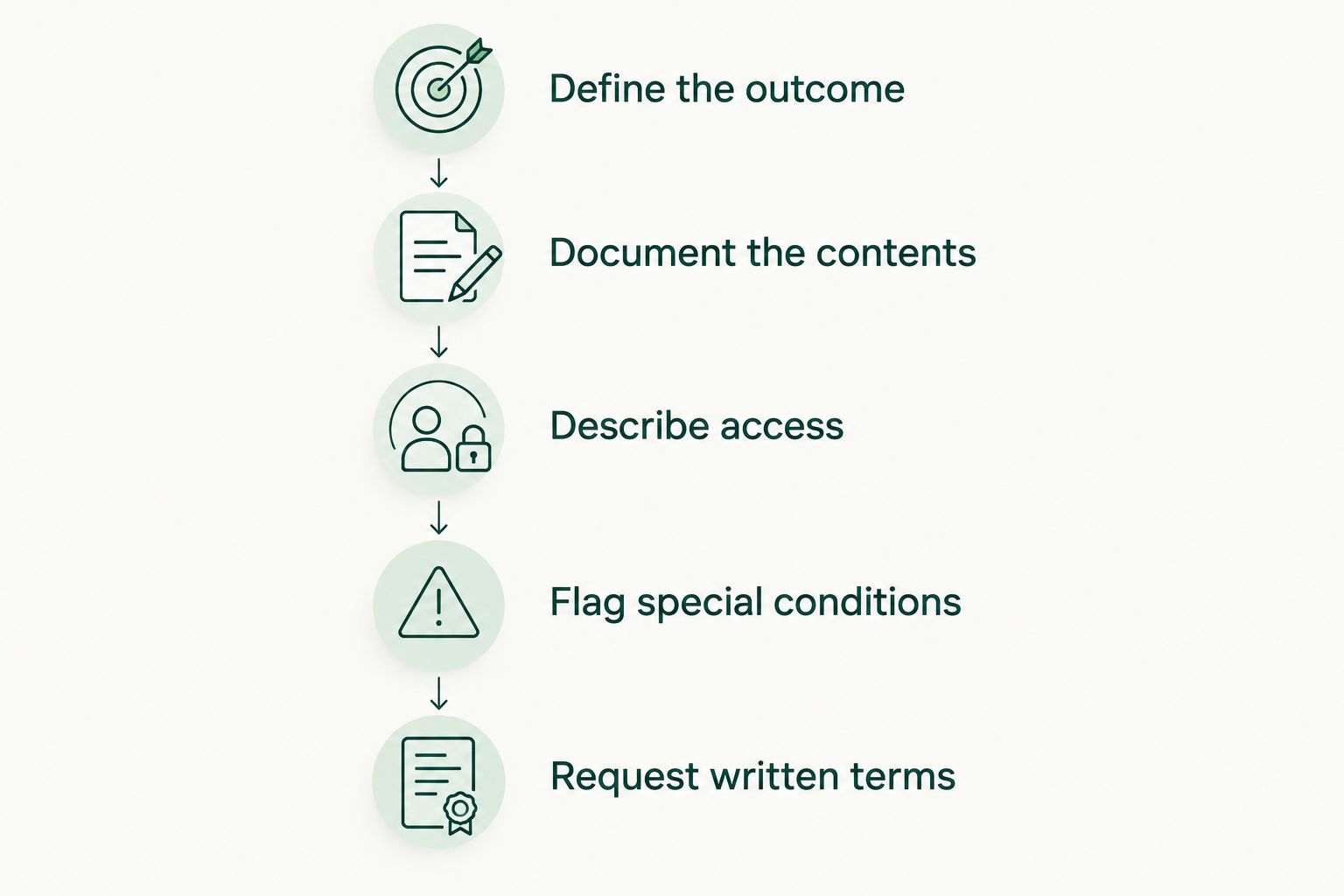
*Use the same job description when asking independent providers to quote.*
Expelled is a property cleanout marketplace for homeowners, property professionals, and businesses who want to connect with independent providers. You can use Expelled to make that connection; confirm the scope, suitability, and terms directly with the independent provider rather than treating the marketplace as the cleanout contractor.
Connect with independent providers
Prepare your property description before discussing cleanout scope and terms.
[Explore the marketplace](https://expelled.online/)
How do you compare hoarder cleanup estimates in 2026?
Compare the work described before comparing the total. Place the estimates beside your original job description and identify omissions. Ask for clarification wherever a provider uses a broad label without naming the tasks underneath it.
Check these points before accepting an estimate:
- Work areas: Are all requested rooms, outbuildings, and storage spaces named?
- Item handling: Does the estimate explain sorting, keep-items, bulky objects, and excluded materials?
- End condition: Is the agreed result removal-only, removal plus specified cleaning, or something else?
- Changes: Who approves added work, and how will the provider document it?
- Responsibility: Who performs the work, and what documentation is relevant to that scope?
- Terms: Are payment requirements, cancellation terms, and unresolved conditions stated clearly?
A concise estimate with explicit boundaries is more useful than a long description that leaves responsibility unclear. If a provider has not assessed an inaccessible area, ask how that uncertainty will be handled before authorizing the job.
Keep the accepted scope with the photographs and written clarifications. That record gives both parties a shared reference if the property conditions or requested work change.
Is hoarder cleanup the same as junk removal?
Hoarder cleanup is not necessarily the same scope as junk removal. A property can need sorting, removal, cleaning, and specialist work, while a junk removal agreement covers only the tasks listed in that agreement.
Use the condition of the property to describe the request, not the service label alone. Ask each provider to confirm which parts they perform and which remain your responsibility.
Can you reduce the scope before requesting a quote?
You can narrow the requested work by making disposal decisions and identifying areas that do not need service. Clearly separate belongings to keep where it is safe to do so, provide access information, and decide whether cleaning belongs in the same request.
Do not move heavy objects, disturb suspect materials, or enter unsafe areas to prepare for an estimate. A narrower scope is only useful when it still addresses the property's actual needs.
FAQ
How much does a hoarder cleanup cost in 2026?
A hoarder cleanup in 2026 requires a property-specific quote based on sorting, removal, access, cleaning, and any specialist work. Request a written breakdown so you can distinguish the quoted work from excluded tasks.
Does a hoarder cleanup quote include deep cleaning?
Deep cleaning is included only when the provider's written scope says so. Ask which rooms, surfaces, and cleaning tasks are covered rather than relying on the word cleanout.
Can I get a hoarder cleanup estimate from photographs?
Ask the provider whether photographs are sufficient for the estimate or whether a property assessment is required. Show accessible rooms, bulky items, and access routes, and identify areas you could not photograph safely.
What should I tell a cleanout provider before asking for a quote?
Tell the provider which areas need work, what must be removed, what must stay, and how the property is accessed. Disclose suspected hazards and state whether you need sorting or cleaning as well as hauling.
Will a junk removal provider handle hazardous materials?
Confirm material acceptance directly with the provider before authorizing removal. Do not assume a general hauling service accepts chemicals, sharps, contaminated contents, or every other item at the property.
Does Expelled perform hoarder cleanups?
Expelled connects homeowners, property professionals, and businesses with independent providers offering property cleanouts, junk removal, and hauling. Confirm the proposed services, terms, and suitability directly with the independent provider.
What happens if the provider discovers more work during the cleanout?
The written agreement should explain how additional work is identified and approved. Ask the provider to document the changed scope before proceeding with work outside the original agreement.
One last thing
Decide what happens to uncertain items before the first item leaves. Set aside a clearly identified review area, name the person who can authorize disposal, and tell the provider to pause on belongings that fall outside the agreed instructions.
That rule belongs in your 2026 cleanout brief alongside access details and the requested finish standard. It addresses a problem that a quoted total cannot solve: deciding what should leave the property in the first place.