
A whole-house cleanout has no single standard duration: the schedule depends on what must leave, what still needs sorting, access to the property, and the independent provider’s work plan. Ask for a property-specific estimate that separates preparation, removal, and any follow-up work; loading time alone does not describe the full job.
TL;DR
- How long does a whole-house cleanout take? Get a property-specific schedule covering sorting, access, removal, and handover.
- Expelled connects homeowners and property professionals with independent providers for property cleanouts and junk removal.
- Confirm what completion means before comparing schedules: removing belongings is not the same as cleaning the property.
- Give each provider the same room inventory, access details, and removal instructions to compare proposals.
How long does a whole-house cleanout take?
The useful answer is a schedule for your property, not a generic promise about house size. A provider needs to understand both the amount of work and the decisions that remain before estimating the duration. An empty-looking bedroom with a heavy item and difficult stairs presents a different job from a room of already-sorted boxes beside an accessible exit.
For a whole-house cleanout planned in 2026, use these steps to get a usable estimate:
- Define removal. List the rooms, outbuildings, storage areas, and outdoor items included in the job.
- Resolve sorting. Identify what stays, what leaves, and what still needs an owner’s decision.
- Describe access. Explain stairs, elevators, parking, locked areas, and the route from the property to the loading area.
- Request a schedule. Ask the provider to identify preparation, on-site removal, disposal arrangements, and handover separately.
Expelled connects homeowners, property professionals, and businesses with independent providers offering property cleanouts, junk removal, and hauling services. The independent provider assesses the job and discusses its schedule with you; the marketplace does not perform the cleanout.
Why this matters
A cleanout deadline often sits between other commitments: handing back keys, preparing a property for sale, or arranging work by another contractor. Treating a removal estimate as the entire project schedule leaves those handoffs unclear. Define the finished condition before you agree on the finish date.
For your 2026 planning, distinguish the requested deadline from the provider’s proposed schedule. Tell the provider what must happen by that deadline and ask which tasks the proposal actually covers. A booking request is not confirmation that the work can be completed within your preferred window.
Separate preparation, removal, and handover
Use 3 checkpoints to discuss the job: preparation complete, removal complete, and handover complete. These are planning checkpoints, not estimates of how many visits or working days the property needs. They help you see which parts of the schedule depend on your decisions and which depend on the provider’s work.
Preparation complete
Preparation means the provider has clear instructions about what can leave and how to access it. You have identified retained belongings, checked the included spaces, and resolved who can authorize removal. Do not assume the provider will sort personal papers or decide which family possessions to keep.
Ask whether the provider needs an inspection, photographs, or a walkthrough before confirming the scope. Show the difficult areas as well as the main rooms. A photograph of the front room does not describe a basement, loft, garage, or locked storage cupboard.
Removal complete
Removal means the agreed items have left the areas included in the job. Ask whether the proposed schedule covers loading only or also accounts for the provider’s hauling and disposal arrangements. Confirm how the provider handles items that do not fit the original description.
Keep the distinction clear when comparing proposals. A provider describing time at the property is answering a different question from a provider describing the entire removal process.
Handover complete
Handover means you have checked the agreed areas and recorded anything outstanding. It does not automatically mean the property has been cleaned, repaired, or prepared for occupancy. Those tasks need their own scope if you require them.
Arrange who will inspect the property and who can approve changes during the job. If you cannot attend, identify an authorized contact before work starts rather than leaving the provider to find a decision-maker.
!Timeline separating preparation, removal, and handover during a whole-house cleanout
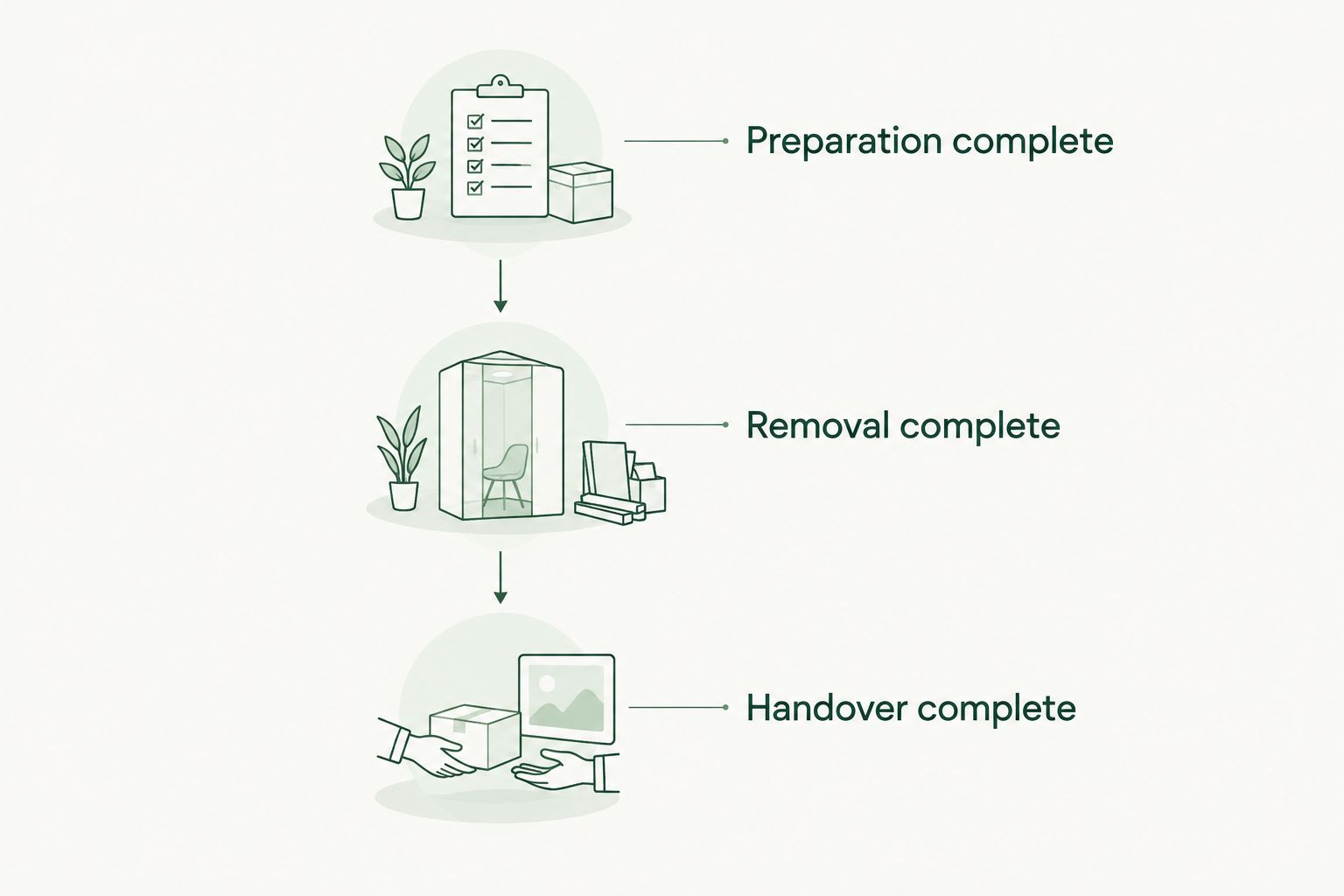
*Confirm each checkpoint separately instead of treating loading as the entire job.*
Which cleanout approach matches your situation?
Choose an approach based on what you can organize yourself and what you need the independent provider to handle. Do not compare a collection of prepared items with a whole-property removal proposal as though they cover identical work. For a 2026 cleanout, put the same written scope in front of every provider you contact.
| Approach | Best for | Practical advantage | Limitation to address | |---|---|---|---| | Owner prepares; provider removes | Owners who can decide what stays before removal | Gives the provider clear removal instructions | Your sorting work remains outside the provider’s removal schedule | | Provider assesses the full property | Jobs involving several spaces or unclear access | Lets the provider assess the described property-wide scope | You still need to confirm exactly which tasks the provider accepts | | Staged cleanout | Properties where some areas cannot be released together | Separates work around access or ownership decisions | Each stage needs its own instructions and agreed handover |
Choose the approach that matches the property’s actual readiness. Calling an unfinished sorting project “ready for removal” does not make the decisions disappear. Equally, a staged plan needs a clear boundary between the areas ready now and the areas excluded until later.
Use the whole-house cleanout company guide alongside your written scope when preparing questions for providers. Compare what each provider agrees to do, not just the duration quoted in an initial conversation.
Why whole-house cleanout time varies
Ask about these 6 job details before accepting a schedule. They describe the work; they are not a formula for calculating hours. The provider needs to assess how they apply to your particular property.
- Contents and volume. Describe what occupies each space, including furniture, loose belongings, and stored materials. Room count alone leaves the contents unspecified.
- Sorting decisions. Identify belongings that remain undecided. The removal instructions need to distinguish retained items from items authorized to leave.
- Access conditions. Report stairs, narrow passages, elevator rules, parking restrictions, and locked areas. Explain the actual loading route rather than supplying only the street address.
- Handling requirements. Identify bulky, heavy, fragile, or awkward items. Ask whether the provider accepts them and what preparation the provider requires.
- Material restrictions. Flag chemicals, paint, batteries, and other materials needing specific handling. Do not assume a general cleanout proposal includes every material on the property.
- Completion standard. State whether you need belongings removed, floors swept, or separate cleaning work. Confirm each requested task rather than treating “cleanout” as a complete specification.
These details also explain why estimates for similarly sized houses are not interchangeable. Describe the job by its contents, access, and finish requirements—not just its bedrooms. Keep that description consistent when requesting revised proposals.
How to describe your job before requesting a schedule
Prepare a room-by-room inventory that another person can follow without your explanation. Include spaces that are easy to overlook: under-stair cupboards, sheds, garages, and outdoor storage, where applicable. Mark any area that is excluded so the provider does not confuse the property boundary with the removal scope.
For a 2026 provider inquiry, send a short job brief with these headings:
- Included spaces: Name each area that needs attention.
- Items leaving: Describe the contents and identify difficult items.
- Items staying: Explain how retained belongings will be identified.
- Access: Describe entry, stairs, parking, and loading restrictions.
- Decision-maker: Name the person authorized to answer questions and approve changes.
- Required finish: State the condition you expect at handover and your requested deadline.
Take photographs that show the room and its exit route, not only close-ups of individual objects. Avoid including personal documents, identifying information, or valuables in images you share. Ask the provider whether the photographs are sufficient or whether an assessment is needed before the schedule can be confirmed.
Expelled is for homeowners and property professionals seeking to connect with independent providers for property cleanouts. It offers a connection point, not a substitute for confirming a provider’s scope, handling requirements, or proposed completion schedule.
Describe your property cleanout
Prepare your room inventory and access details before connecting with independent providers.
[Explore Expelled](https://expelled.online/)
What should a usable cleanout schedule include?
A usable schedule explains what must be ready before work starts, what the provider will do, and how completion will be checked. Ask the provider to put those points in writing. An estimate that names a finish without defining the work leaves you unable to judge whether the proposed plan meets your needs.
Keep 2 separate windows in your planning: the requested working window and the property handover window. The first concerns access for the work; the second concerns when you need to accept the result or release the property. Ask the provider to explain how its proposed schedule fits both.
Record any conditions attached to the estimate, including access arrangements and unresolved items. If the scope changes after the assessment, request an updated schedule rather than assuming the original estimate still applies. Share the agreed plan with anyone controlling keys, building access, or handover approval.
Can a whole-house cleanout be completed in one visit?
A single-visit cleanout requires confirmation from the independent provider after reviewing the job. Do not treat “one visit” as an established duration or assume it includes sorting, hauling, and cleaning. Ask what remains your responsibility before and after that visit.
If a provider proposes multiple visits, ask what each visit accomplishes. A staged proposal should explain the boundaries of each stage, not simply leave the final completion point open.
Does a whole-house cleanout include cleaning afterward?
A whole-house cleanout does not automatically include cleaning afterward. Confirm whether the provider’s scope covers removal alone, sweeping, or any additional cleaning task. Property repairs and preparation for occupancy also need explicit agreement.
Describe the finish in observable terms. “Remove the listed contents from the included rooms” gives you a clearer handover check than “leave everything ready.”
How do I compare providers with different time estimates?
Compare the included work before comparing the estimated duration. Check whether each proposal includes the same spaces, belongings, access conditions, sorting responsibilities, and handover requirements. A shorter estimate is not a like-for-like comparison when it excludes work another provider has included.
Ask each provider to explain its assumptions using your written brief. Choose based on the confirmed scope and a schedule that meets your requirements, rather than an unsupported promise of speed.
FAQ
How long does a whole-house cleanout take if everything is already sorted?
Sorting beforehand resolves decisions, but it does not establish a standard cleanout duration. The independent provider still needs to assess the contents, access, handling requirements, and agreed finish.
Can I get an accurate cleanout schedule from photographs?
Photographs help describe the job, but ask the provider whether they are sufficient to confirm a schedule. Include the relevant rooms, difficult items, and access routes, and disclose areas the photographs do not show.
Do I need to be at the property during a whole-house cleanout?
Confirm attendance and access requirements with the independent provider. Identify someone authorized to answer questions, approve changes, and check the completed scope if you will not attend.
Will a provider remove everything from the house?
Only treat items as included when the provider has agreed to remove them. Identify retained belongings, restricted materials, and unusual items before work starts.
Does Expelled carry out whole-house cleanouts?
Expelled connects homeowners, property professionals, and businesses with independent providers offering property cleanouts, junk removal, and hauling services. The independent provider discusses the work scope and proposed schedule with you.
What should I do if the cleanout scope changes?
Request an updated scope and schedule before treating additional work as agreed. Explain what changed and confirm how the change affects the provider’s proposed completion plan.
One last thing
Write the handover checklist before requesting the schedule. Walk through the property and describe what must be gone, what must remain, and which areas must be checked. That checklist gives both you and the independent provider a concrete definition of completion for your 2026 cleanout.