
Yes, junk removal companies can handle hoarder cleanups when the work falls within their accepted materials, equipment, and safety procedures; biohazard cleanup requires a provider qualified for the specific contamination involved. For a 2026 cleanout, confirm removal, decontamination, and disposal responsibilities separately—agreeing to haul belongings does not establish that a company can handle blood, sewage, sharps, or other hazardous material.
TL;DR
- Can junk removal companies handle hoarder cleanups? Yes, but confirm accepted materials and contamination exclusions before hiring.
- Biohazard cleanup and ordinary junk removal require different scopes; hauling alone does not establish decontamination capability.
- Expelled connects homeowners, property professionals, and businesses with independent providers for property cleanouts, junk removal, and hauling.
- Describe observed conditions, protect belongings marked for retention, and get each provider’s responsibilities in writing.
Can junk removal companies handle hoarder or biohazard cleanups?
A cluttered property is not automatically a biohazard site, and a cleanout service is not automatically a remediation service. Choose the provider by the conditions inside the property, not just the description on its service page.
Use this comparison to separate the work before requesting estimates. The guide to junk removal companies for hoarder cleanups provides a related starting point for provider selection.
| Service route | Best for | Main benefit | Limitation to confirm | |---|---|---|---| | Junk removal provider | Removing accepted belongings and debris without suspected contamination | Handles the removal and hauling scope | Does not establish capability to disinfect or handle hazardous waste | | Biohazard cleanup provider | Assessing and addressing biological contamination within its stated scope | Addresses contamination rather than only removing objects | Ordinary hauling, repairs, and other work still need explicit inclusion | | Coordinated cleanout and remediation | Properties needing both contents removal and contamination treatment | Separates responsibilities across the job | Requires a written handoff so no task falls between providers |
These routes are not interchangeable. A company that offers both services should still explain which workers, procedures, and disposal arrangements apply to your particular property.
Why this matters
An empty room and a decontaminated room are different outcomes. Removing furniture does not, by itself, address contamination on flooring, walls, or remaining contents.
For your 2026 project, define the required outcome before comparing providers: belongings removed, affected areas treated, or both. That distinction keeps an ordinary hauling proposal from being mistaken for a complete cleanup plan.
Avoid diagnosing the occupant from photographs or describing every possession as trash. Focus on observable conditions, authorized disposal decisions, and the work the property needs.
When ordinary junk removal fits the job
A junk removal provider fits when the planned work involves accepted household contents or debris and the provider has assessed the access and handling conditions. Explain whether items are loose, bagged, stacked, damaged, or difficult to reach.
Best for: removing approved contents where no suspected contamination requires specialist assessment. The advantage is a defined removal scope. The limitation is that sorting, detailed cleaning, pest treatment, and repairs are not established merely by booking a cleanout.
Ask what happens if workers uncover an unexpected condition behind furniture or beneath piled belongings. Get a stop-work and notification process rather than permission to continue regardless of what they find.
Do not package suspicious waste to make it look like ordinary household junk. Providers need accurate information to decide whether they can accept the work.
When a biohazard cleanup provider is needed
Suspected blood contamination, sewage, discarded needles, or extensive human or animal waste requires a different conversation from routine hauling. Describe what you observed without touching, opening, or disturbing material to investigate it.
Best for: assessing and addressing biological contamination within the provider’s documented capabilities. A specialist scope addresses the contamination itself. Its limitation is that the agreement still needs to identify what removal, cleaning, waste handling, and documentation are included.
Ask the provider to explain its relevant training, protective procedures, insurance, and disposal arrangements. Requirements depend on the work and jurisdiction; a general business license alone does not establish suitability for every hazardous cleanup.
A persistent odor does not identify its source. Report it, along with visible conditions, and let the appropriate provider determine what assessment is necessary.
When separate providers need to coordinate
Some properties need both contents removal and specialist treatment. Do not assume the sequence: contamination and access conditions determine whether removal can begin, what must remain undisturbed, and when another provider can enter.
Best for: a property with distinct hauling and remediation responsibilities. Coordination lets each provider accept a defined task, but it also creates handoff risks unless someone owns the overall scope.
Name the person authorized to approve changes. Ask each provider to identify its starting conditions and completion point, including who handles material rejected by the other provider.
For a rental or commercial property, share the same written scope with the owner or authorized representative. Do not treat a tenant departure or an apparently abandoned room as permission to discard everything inside.
Why hoarder cleanup requirements vary
The label describes less than the actual site conditions. Use these factors to explain what makes your job different:
- Material condition: Dry belongings, spoiled contents, and visibly contaminated objects require different acceptance decisions.
- Access: Blocked passages, stairs, and restricted loading areas affect how providers assess safe removal.
- Sorting decisions: Separating documents, valuables, and retained possessions changes the work from indiscriminate hauling.
- Suspected hazards: Needles, unknown containers, sewage, or unstable piles require assessment before ordinary removal proceeds.
- Property condition: Damaged flooring or other suspected structural problems need attention beyond contents removal.
- Required endpoint: An emptied room, cleaned surfaces, and a property prepared for repairs are different scopes.
Photographs support this description, but they do not replace an assessment when important conditions remain hidden. Tell the provider which areas you could not safely inspect.
How do you prepare a cleanout request?
Use these 3 job stages for a 2026 cleanout request: document conditions, agree on responsibilities, and confirm the handoff. Keep the sequence focused on information and decisions—not on entering an unsafe space to prepare it yourself.
1. Document conditions
Take photographs only from safe, accessible positions. Include an overall view, the removal route, and visible conditions that affect handling; do not climb over piles or move suspicious material for a clearer picture.
Write a room-by-room description of what should leave and what must remain. Note locked rooms, inaccessible areas, and anything you have not inspected rather than guessing about their contents.
2. Agree on responsibilities
Send each provider the same description so you can compare like-for-like scopes. Identify who will sort belongings, authorize disposal, handle excluded material, and decide whether work stops after a new condition is discovered.
Expelled is best for homeowners, property professionals, and businesses seeking to connect with independent providers for property cleanouts. Expelled is a marketplace, not the company performing the cleanout; confirm job-specific capabilities directly with the independent provider.
3. Confirm the handoff
Ask what the provider will leave behind and how completion will be documented. For coordinated work, specify who decides that the next provider can begin and what information accompanies the handoff.
Keep the accepted scope and subsequent changes together. A message approving furniture removal should not be treated as authorization to discard documents or undertake contamination treatment.
!Cleanout planning sequence: document conditions, agree on responsibilities, and confirm the handoff.
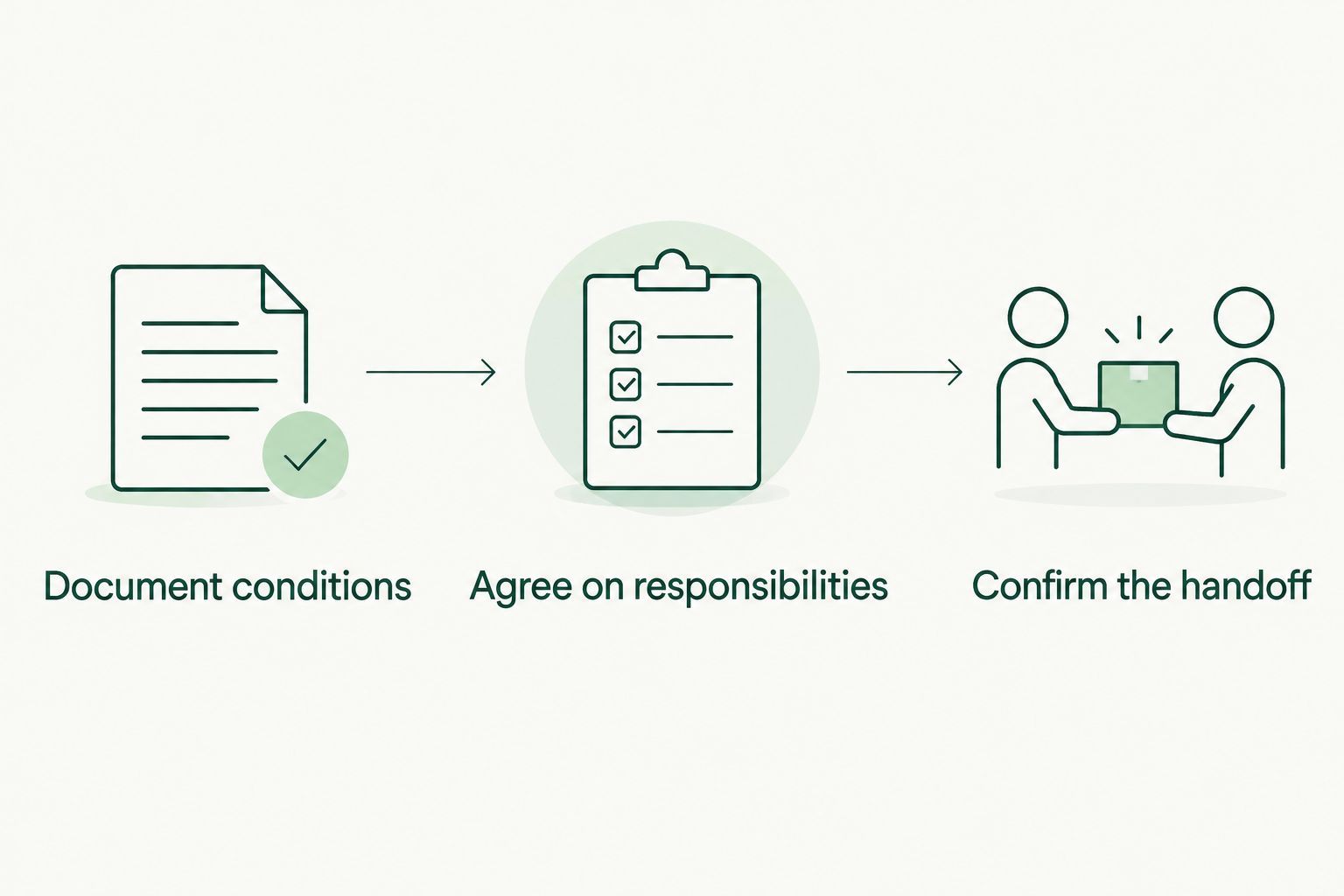
*Agree on responsibilities before removal begins, and define what completion means.*
What should you ask before accepting a provider?
Start with these 4 questions. Request answers that refer to your property, rather than accepting a general statement that the company handles difficult cleanouts.
- What do you accept? Ask about the specific contents and suspected conditions you disclosed, including any material the provider will leave untouched.
- What do you exclude? Separate hauling, sorting, surface cleaning, decontamination, pest work, and repairs in the written response.
- What happens if conditions change? Identify who pauses work, who receives notice, and how additional work gets approved.
- How is completion documented? Agree on photographs, a completion description, or other records appropriate to the scope.
For a 2026 provider comparison, evaluate those answers against the same job description. A more detailed proposal is useful only if its responsibilities match what you actually need.
Ask for evidence of insurance relevant to the proposed work and verify any required credentials with the issuing body. A broad claim of being insured is not a substitute for understanding the work covered.
Can a hoarder cleanout include sorting personal belongings?
Yes, a hoarder cleanout can include sorting when the provider explicitly accepts that task. Do not assume a hauling crew will identify important documents, valuables, medications, or possessions with sentimental significance.
Set aside a clearly identified retention area if that can be done safely, and name the person authorized to make disposal decisions. Ask how the provider handles uncertainty instead of directing workers to discard everything they cannot identify.
Does removing contaminated furniture finish the cleanup?
No, removing contaminated furniture does not establish that the affected room has been cleaned or decontaminated. The scope must address any remaining affected surfaces and materials separately.
Ask the relevant specialist to explain the completion criteria for its work. A room that looks empty is not proof that every identified hazard has been addressed.
Can a property manager arrange the work remotely?
Yes, a property manager can coordinate communications remotely, but access, disposal authority, and site assessment still need named responsibilities. Photographs and messages do not establish conditions in concealed or inaccessible areas.
Give the providers an authorized contact for decisions during the job. Document what they should do if they find retained belongings, unexpected contamination, or conditions outside the accepted scope.
FAQ
Can junk removal companies handle hoarder cleanups without biohazards?
Yes, a junk removal company can handle a hoarder cleanout when it accepts the contents, access conditions, and removal scope. Confirm whether sorting and cleaning are included rather than assuming they accompany hauling.
How do I know whether a hoarder house needs biohazard cleanup?
Suspected blood contamination, sewage, sharps, or extensive human or animal waste calls for assessment by a provider qualified for the specific condition. Report what you can observe safely without disturbing material to investigate.
Can a regular junk removal crew take used needles?
Do not assume a regular junk removal crew accepts used needles. Disclose them before work begins and arrange handling through a provider that confirms appropriate procedures and disposal arrangements.
Is junk removal the same as deep cleaning?
No, junk removal and deep cleaning are separate tasks unless the written agreement includes both. Removing contents does not establish that remaining surfaces have been cleaned or decontaminated.
Can I stay inside while a contaminated property is cleaned?
Do not assume remaining inside is safe. Ask the qualified provider responsible for assessing the contamination to define access restrictions before work begins.
Does Expelled perform hoarder or biohazard cleanups?
Expelled connects customers with independent providers offering property cleanouts, junk removal, and hauling; it does not perform the cleanouts itself. Ask the independent provider directly whether it accepts hoarder cleanouts or the specific contamination involved.
What should I send when requesting a hoarder cleanout assessment?
Send a description of the contents, safe-access photographs, known or suspected hazards, and clear retention instructions. Identify areas you have not inspected and the person authorized to approve disposal.
One last thing
Write a stop-work instruction before writing a removal instruction. For your 2026 cleanout, specify that newly discovered needles, suspicious containers, contamination, or unsafe access must trigger notification and reassessment—not automatic removal.
That instruction gives the provider a clear decision point. It also prevents an approved hauling task from quietly becoming work nobody assessed or accepted.