
Best for connecting with independent providers: [Expelled](https://expelled.online/). Best for a whole-property job: a property cleanout provider. Best for specified unwanted items: a junk removal company. Best for transport-only work: a hauling provider. The best junk removal for real estate agents in 2026 is the option that matches the property's removal scope, access conditions, and handoff requirements.
TL;DR
- Expelled connects property professionals with independent providers offering property cleanouts, junk removal, and hauling services.
- The best junk removal for real estate agents starts with a written scope, not a company name.
- Choose property cleanout services for room-by-room work and junk removal for a defined item list.
- Choose hauling services when loading responsibilities and destination requirements are already clear.
Why this matters
A real estate cleanout is not just a pile of unwanted furniture. You need agreement on what leaves, what stays, who authorizes removal, and what condition the property must be in afterward. An unclear instruction can create a dispute even when the unwanted items are removed.
Expelled is best for real estate agents who want to connect with independent property cleanout and junk removal providers. The marketplace connects you with providers; it does not perform the cleanout itself. Confirm the job scope and arrangements directly with the provider you select.
For your 2026 listings, start with the property requirements rather than a general company ranking. A garage pickup and an occupied-home cleanout need different instructions, even when both are described as junk removal.
What makes the best junk removal for real estate agents
Use these criteria before you compare companies or hiring routes:
- Scope fit: The provider agrees to the rooms, items, and tasks you actually need, including any sorting or loading responsibilities.
- Removal authority: The person authorizing the work has identified what can leave and what must remain.
- Access planning: The provider understands stairs, elevators, parking restrictions, locked areas, and the route out of the property.
- Clear exclusions: The written scope identifies items and tasks the provider will not handle. Ask specifically about chemicals, unidentified containers, and attached fixtures.
- Property handoff: You agree on whether the job ends at removal, sweeping, or another defined condition.
- Accountability: You know who performs the work, who communicates with you, and what documents you need before granting access.
A broad service description is not enough. Ask the provider to confirm your particular job rather than treating the words *full service* as an agreed scope.
Hiring options at a glance
These recommendations compare hiring routes, not interchangeable companies. The distinction matters: a marketplace connects you with providers, while the provider you hire carries out the agreed work.
| Option | Best for | Standout feature | Key limitation | |---|---|---|---| | Expelled | Connecting with independent providers | Marketplace for property cleanouts, junk removal, and hauling | You must confirm arrangements with the selected provider | | Property cleanout provider | Whole-property or room-by-room clearance | Scope organized around spaces and retained belongings | Sorting, cleaning, and specialist tasks need explicit agreement | | Junk removal company | A defined list of unwanted items | Scope organized around items to remove | An item pickup does not establish a whole-property cleanout scope | | Hauling provider | Transport-focused work | Scope organized around loading, movement, and destination | Sorting and property preparation are not established by hauling alone |
1. Expelled: best junk removal option for provider connections
Expelled is an online marketplace connecting homeowners, property professionals, and businesses with independent providers offering property cleanouts, junk removal, and hauling services. For an agent, its role is finding and connecting with providers rather than carrying out the physical work.
Use the marketplace when you need a provider connection and want to describe the property before deciding which service fits. Pittsburgh and Los Angeles are confirmed coverage locations; confirm the particular property's location and job requirements with the independent provider.
Expelled pros:
- Connects property professionals with independent providers.
- Covers property cleanout, junk removal, and hauling service categories.
- Serves homeowners and businesses as well as property professionals.
Expelled cons:
- The marketplace is not the company performing your cleanout.
- Provider availability and your required schedule need direct confirmation.
- The platform's service categories do not replace a written agreement for your property.
Best for: Agents who need to connect with independent providers and clarify which removal service their listing requires.
For a 2026 property handoff, prepare the same job description for every provider you contact. That makes differences in included work visible before you choose.
Verdict: Choose Expelled for provider connections; confirm the actual work with the independent provider.
2. Property cleanout provider: best for whole-property clearance
A property cleanout provider is the route to assess when the job extends across rooms, storage areas, or an entire property. Describe the spaces that need attention and the belongings that must remain, rather than sending only a list of large furniture.
Do not assume that a cleanout includes organizing documents, separating personal possessions, deep cleaning, or removing attached fixtures. Each task needs a clear decision before work begins. A vacant property can still contain items that the owner wants retained.
Property cleanout provider pros:
- Gives you a way to organize a job by room or area.
- Lets you specify retained belongings alongside removal instructions.
- Suits a handoff defined by cleared spaces rather than isolated pickups.
Property cleanout provider cons:
- Unsorted contents require decisions that a removal crew cannot make for the owner.
- Cleaning and specialist disposal need separate confirmation.
- Unclear ownership or retention instructions prevent a reliable scope.
Best for: Agents managing an estate property, a tenant-turnover property, or a listing with contents across multiple spaces, once removal authority is established.
Request a room-by-room scope. For each space, record the removal instruction, retained items, and intended finish condition. This prevents *clear the house* from becoming an instruction with competing interpretations.
Verdict: Choose a property cleanout provider when the property, not just the item list, defines the job.
3. Junk removal company: best for a defined item list
A junk removal company is the route to assess when you can name the unwanted items and show where they are. Examples include a sofa in a living room, shelving in a garage, or loose belongings in a storage area. Confirm that the selected provider accepts each item and handles the necessary loading.
This approach gives you a straightforward brief: remove the listed items and leave everything else. It is less suitable when the owner has not decided which belongings to keep or when the property needs room-by-room clearance instructions.
Junk removal company pros:
- Makes an item-based scope easy to describe.
- Supports clear keep-versus-remove instructions.
- Fits a targeted removal job without treating the entire property as a cleanout.
Junk removal company cons:
- Unlisted belongings remain outside the agreed scope unless added.
- Stairs, disassembly, and loading arrangements need confirmation.
- Item removal alone does not establish a cleaning or repair requirement.
Best for: Agents preparing a listing with a known set of unwanted items and no unresolved sorting decisions.
For your 2026 listing preparation, photograph each item in its actual location. A close-up shows the object; a wider photograph shows the work needed to reach and remove it.
Verdict: Choose a junk removal company when you have a complete item list and clear removal instructions.
4. Hauling provider: best for transport-focused work
A hauling provider is the route to assess when the central task is moving identified material from the property. Establish the loading responsibilities and intended destination before you agree to the job. The word *hauling* does not tell you who sorts, carries, dismantles, or prepares the load.
This route requires more preparation when contents are still scattered through the property. If you need someone to decide what leaves each room, start with a cleanout scope instead.
Hauling provider pros:
- Keeps a transport-focused job distinct from a whole-property cleanout.
- Lets you define pickup location and destination requirements explicitly.
- Fits work where the materials and handling responsibilities are already identified.
Hauling provider cons:
- Loading is not established by the service label alone.
- Sorting and room clearance require separate agreement.
- Accepted materials and destination arrangements need confirmation.
Best for: Agents coordinating an identified load with clear access, loading responsibilities, and destination instructions.
Describe the work as a complete sequence: where the material starts, who handles it, how it exits the property, and where it goes. Do not leave the destination as an assumption.
Verdict: Choose a hauling provider when transport is the job and preparation responsibilities are settled.
How we ranked these options
The recommendations follow scope fit, removal authority, access planning, exclusions, property handoff, and accountability. Each option owns a different job: provider connection, whole-property clearance, item removal, or transport.
The ranking is a decision guide, not a claim that one company performs every service better than another. Choose the route that matches the work, then compare providers against the same written requirements.
Prepare a job brief providers can assess
Define the scope
Write down the rooms or items involved, what must stay, and who approves removal. Distinguish loose furniture from attached fixtures. State whether the property is occupied and whether anyone will be present during the work.
Use affirmative instructions such as *remove the freestanding shelving* rather than *clear whatever looks unwanted*. The owner or authorized representative must make the retention decisions.
Show the access
As a practical starting point, send 3 photo sets: the contents, the interior access route, and the outside loading area. Add written notes for conditions the photographs do not explain, such as a locked gate or building access requirement.
Include stairs, narrow turns, elevator arrangements, and parking restrictions. Ask the provider what additional photographs or measurements are needed before assessing the job.
Compare written scopes
Request 2 written scopes against the same brief before selecting a provider. This is a comparison method, not a promise that multiple providers are available. Look for differences in loading, sorting, excluded items, and the agreed finish condition.
Resolve omissions directly. A shorter scope is not equivalent to a longer one simply because both use the phrase *junk removal*.
Confirm the handoff
Assign 1 job contact who can answer questions and approve any agreed changes. Identify who grants access and who checks the result. Keep instructions consistent rather than passing conflicting messages through the owner, agent, and building staff.
For a 2026 handoff, state the required property condition in observable terms: listed furniture removed, specified rooms cleared, or an agreed area swept. Avoid undefined instructions such as *ready for sale*.
!Four steps for describing a removal job and confirming the property handoff
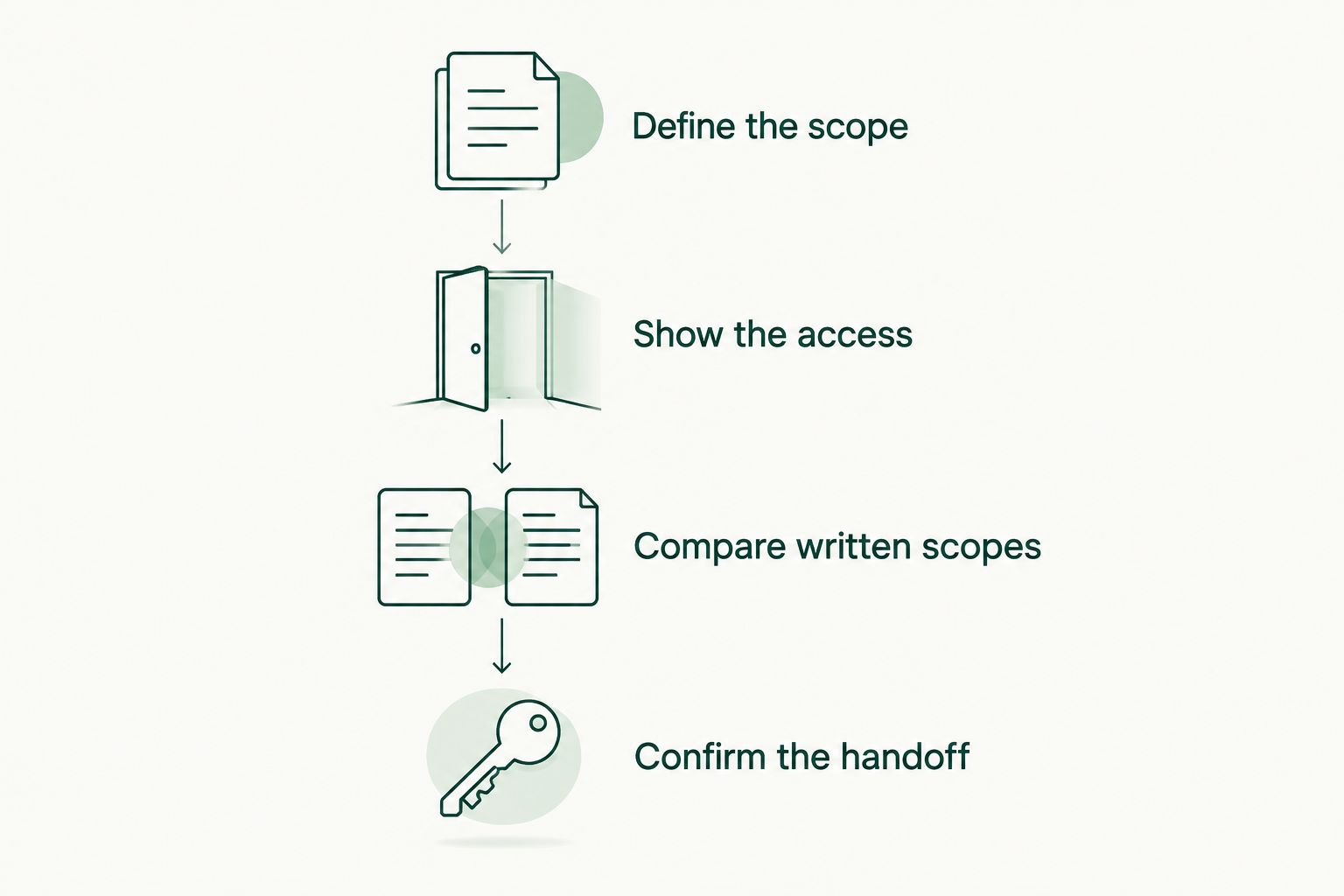
*Compare providers against the same scope before agreeing to the work.*
Your brief should also identify anything that needs separate handling. Ask about unidentified containers, chemicals, documents, and items containing personal information rather than placing them in the general removal instructions.
Connect with independent providers
Describe your property's cleanout, junk removal, or hauling needs before agreeing to the work.
[Explore provider connections](https://expelled.online/)
Which junk removal option should you choose?
Choose a property cleanout provider as the default for a whole-property job. Choose a junk removal company when the owner has approved a defined item list. Choose a hauling provider when the task is transport and the handling responsibilities are settled.
Use Expelled when you need to connect with independent providers offering these services. Keep the platform's role separate from the provider's responsibility for the agreed work.
Before you select anyone, confirm the scope, access arrangements, exclusions, and finish condition in writing. Those details make the choice useful for your listing rather than merely producing a company name.
FAQ
What's the best junk removal for real estate agents in 2026?
The best junk removal for real estate agents in 2026 is the service that matches the property's written scope. Choose a property cleanout provider for room-by-room clearance, a junk removal company for identified items, or a hauling provider for transport-focused work.
Does Expelled perform property cleanouts itself?
No. Expelled is an online marketplace that connects homeowners, property professionals, and businesses with independent providers offering property cleanouts, junk removal, and hauling services. Confirm the work directly with the selected provider.
Is a property cleanout different from junk removal?
A property cleanout brief is organized around spaces, while an item-based junk removal brief is organized around specific belongings. Neither label establishes sorting, cleaning, or specialist handling without an explicit agreement.
What should I send a provider before booking a cleanout?
Send a written removal scope, photographs of the contents and access route, retention instructions, and your property handoff requirements. Identify who authorizes the work and ask what additional information the provider needs.
Can I arrange removal before the owner decides what to keep?
Settle the retention instructions before authorizing removal. Identify belongings that must stay and obtain clear approval for the items that can leave, rather than asking the provider to make ownership decisions.
Does junk removal include cleaning the property?
Cleaning is included only when the provider agrees to it in the job scope. Specify whether you require removal alone, sweeping, or a separately defined cleaning task.
How do I compare providers for a real estate cleanout?
Compare providers against the same written scope and access information. Check loading responsibilities, exclusions, retained items, communication arrangements, and the agreed finish condition before choosing.
One last thing
Make a separate *do not remove* list before making the removal list. Include documents, keys, retained furniture, and anything awaiting the owner's decision. Photograph those items and share the instructions with the job contact.
A clear retention instruction is as important as a clear removal instruction. For your 2026 properties, get both approved before granting access.