
Best overall for a whole-unit job: a full-service property cleanout company; best for connecting with independent providers: [Expelled](https://expelled.online/). Best for already-staged items: a hauling company—this 2026 guide matches the best junk removal for landlords to the work your property actually needs.
TL;DR
- Expelled is best for landlords who want to connect with independent property cleanout providers.
- Choose a full-service cleanout company when items need sorting, lifting, and removal from inside a rental.
- Choose a hauling company when approved items are already separated and ready for collection.
- Use a specialist removal contractor for materials that require separate handling; confirm acceptance before booking.
Why this matters
A rental cleanout is not just a pile of unwanted furniture. You need to decide what can be removed, protect anything staying, describe access, and agree on what counts as finished.
The best provider is the one whose written scope matches your property. A company that collects a staged load is not automatically the right choice for a unit that needs room-by-room sorting. Keep those jobs separate when comparing proposals.
Before authorizing removal, confirm your right to dispose of the items. Rules for tenant belongings depend on the jurisdiction and circumstances; a removal booking does not replace that legal check.
What makes the best junk removal for landlords
Use these criteria for your 2026 shortlist before comparing company names:
- Job fit: Does the provider handle a whole-property cleanout, a staged collection, or a specific material? Ask about the actual work, not just the service label.
- Written scope: Identify the rooms, items, exclusions, and completion standard. Clarify whether removal includes labor inside the property.
- Access planning: Describe stairs, elevators, parking, loading restrictions, and occupied areas. Get confirmation that the proposed work accounts for them.
- Property protection: Ask how the provider will protect floors, doorways, fixtures, and belongings that remain. Request relevant insurance documentation.
- Material handling: Confirm what the provider accepts and how excluded items will be handled. Do not assume mixed contents can leave together.
- Completion evidence: Agree on a final walkthrough or photographs showing the cleared areas. Distinguish junk removal from cleaning and repair work.
Landlord junk removal options at a glance
These options have different roles. The marketplace connects you with providers; the other entries describe the type of company or contractor you would assess for the work.
| Option | Best for | Standout role | Key limitation | |---|---|---|---| | Expelled | Connecting with independent providers | Marketplace for property cleanouts, junk removal, and hauling services | Does not perform the cleanout itself; terms depend on the provider | | Full-service property cleanout company | Whole-unit contents removal | A scope that combines interior removal tasks under one agreement | Cleaning, repairs, and restricted materials need separate confirmation | | Hauling company | Separated, staged items | Collection focused on an identified load | Sorting and interior removal are not assumed | | Specialist removal contractor | Items requiring separate handling | Material-specific assessment and removal scope | Does not replace a general property cleanout |
The table ranks job fit, not company quality. Verify the provider serving your address and the work included before treating any option as a booking decision.
1. Expelled: best junk removal option for connecting with providers
Expelled is an online marketplace that connects homeowners, property professionals, and businesses with independent providers offering property cleanouts, junk removal, and hauling services. It is a starting point for finding a provider, not the company carrying out your rental cleanout.
That distinction matters when you compare proposals. Confirm the job scope, access arrangements, and completion requirements with the independent provider before authorizing work.
Marketplace pros:
- Connects property professionals with independent providers in the relevant service categories.
- Covers property cleanouts, junk removal, and hauling as distinct service needs.
- Suits landlords who want to find a provider rather than organize removal themselves.
Marketplace cons:
- The platform does not perform cleanouts itself.
- Provider availability and job acceptance require confirmation.
- A marketplace listing is not a substitute for checking the provider's proposed scope.
Best for: Landlords who need a way to connect with independent providers and then assess them against a written job description.
Send the same description to each provider you consider. If one proposal covers removal from every room and another covers only items beside the driveway, those are different services, even when both use the phrase junk removal.
Verdict—Hold: Proceed with an independent provider only after the provider confirms the property address, accepted items, and written scope.
2. Full-service property cleanout company: best for whole-unit removal
A full-service property cleanout company is the default option when unwanted contents remain throughout a rental. Look for an agreement that explicitly includes removing approved items from the rooms where they currently sit.
The word full-service is not enough. Ask whether the proposed job includes sorting, dismantling, lifting, carrying, loading, and any agreed final cleanup; do not assume those tasks come together.
Full-service property cleanout company pros:
- Fits a job with contents spread across rooms or storage areas.
- Lets you define interior removal and hauling in one scope.
- Supports a room-by-room list of what stays and what leaves.
- Provides a clear basis for checking completion against the agreed areas.
Full-service property cleanout company cons:
- Broad descriptions leave room for disagreement about included tasks.
- Cleaning and repairs are separate unless expressly included.
- Materials requiring special handling need individual acceptance checks.
Best for: Landlords dealing with furniture, loose contents, and unwanted belongings across an entire unit.
Mark retained items before the provider arrives. A cabinet attached to the wall, an appliance belonging to the property, and a tenant's loose belongings should not be treated as one undifferentiated removal list.
Verdict—Buy: Choose a full-service property cleanout company when the agreement covers all required interior removal tasks and clearly identifies exclusions.
3. Hauling company: best for already-staged items
A hauling company is the appropriate option to assess when approved items are separated and ready for collection. Your job description should identify the load and the exact pickup location.
Do not treat hauling as shorthand for a whole-unit cleanout. Confirm any lifting, dismantling, or movement from inside the building rather than assuming it is included.
Hauling company pros:
- Fits a defined load with little ambiguity about what leaves.
- Keeps the collection scope separate from sorting and property preparation.
- Makes completion easy to check against a photographed staging area.
Hauling company cons:
- You remain responsible for preparation unless the agreement says otherwise.
- Interior removal and dismantling require separate confirmation.
- An unsuitable staging location can conflict with building access or property rules.
Best for: Landlords who have already identified, separated, and safely positioned the items for collection.
Confirm the staging location before moving anything. Keep exits, shared corridors, and occupied areas clear, and check building rules before placing a load outside. Do not create a second handling task by staging items somewhere the provider cannot collect them.
Verdict—Buy: Choose a hauling company for an agreed, staged load; skip this option when you still need sorting and room-by-room removal.
4. Specialist removal contractor: best for separate material handling
A specialist removal contractor belongs on your shortlist when the contents include items outside the general provider's accepted scope. Describe the material and its condition before arranging removal.
Paints, chemicals, certain batteries, and appliances need item-specific disposal checks. If you suspect a building material contains asbestos, stop ordinary cleanout work around it and seek qualified assessment rather than including it in a mixed load.
Specialist removal contractor pros:
- Focuses the agreement on an identified material or handling requirement.
- Keeps excluded items out of the general cleanout scope.
- Gives you a separate point of confirmation for removal and disposal requirements.
Specialist removal contractor cons:
- Suitability depends on the exact material and local requirements.
- Specialist removal does not cover unrelated contents unless agreed.
- You need to coordinate the specialist work with the rest of the cleanout.
Best for: Landlords whose property contains items requiring separate assessment, acceptance, or handling.
Ask the contractor what information is needed to identify the material safely. Do not open, mix, drain, or break apart unknown contents to make them easier to photograph or transport.
Verdict—Hold: Arrange specialist work only after the contractor confirms the material, relevant qualifications, and handling scope.
Prepare a job brief before contacting providers
For a 2026 cleanout, give every provider the same brief. Comparable descriptions produce comparable scopes; a vague request produces answers you cannot reliably compare.
Define scope
List each room or area and the items authorized for removal. Identify retained belongings separately, including fixtures, appliances, keys, documents, and anything whose ownership is unresolved.
Use clear descriptions rather than estimating an unseen load. Say that a sofa remains upstairs or that boxes fill a basement storage area; let the provider assess the work from your information.
Show contents
Start with 3 photo views: a room overview, a close-up of the main removal items, and the access route. Add more views where those do not capture the full job.
Photos support the brief; they do not replace it. State which photographed items must remain and identify anything outside the frame that also needs removal.
Confirm access
Describe stairs, elevator arrangements, door restrictions, parking, and the route from the unit to the loading area. Explain whether tenants or other occupants will remain on site.
Name the person authorized to approve changes. A provider should not have to decide whether an unlisted item belongs in the load.
Check completion
Compare 2 written scopes using the same room list and exclusions. Ask each provider to explain any task that appears in one proposal but not the other.
Plan 1 final walkthrough with the provider or your authorized representative. Check the agreed areas before treating the job as complete, and record any work still outstanding.
!Four steps for preparing and checking a landlord property cleanout
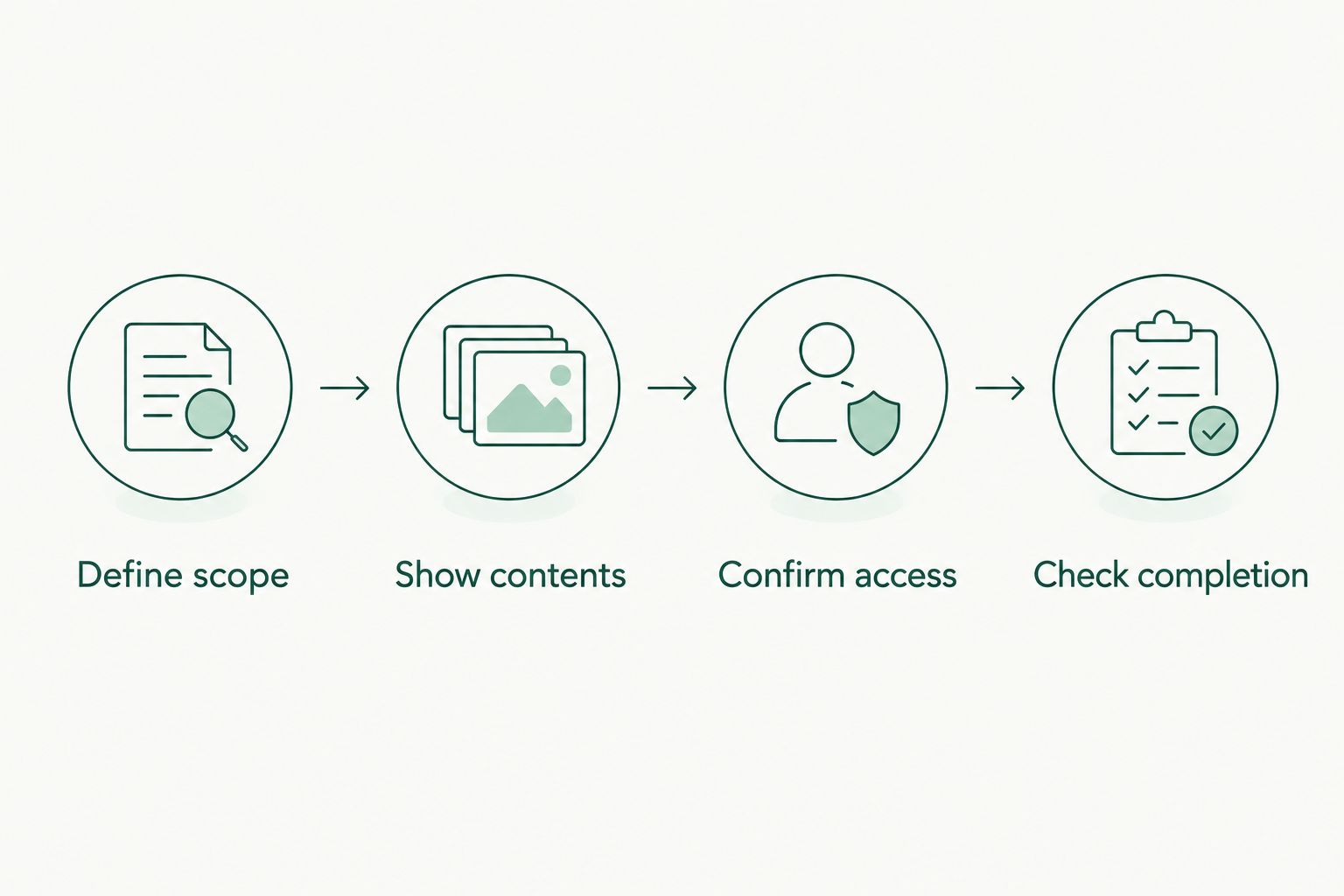
*Use the same job brief to compare providers against the same work.*
A written brief also gives you a record when the scope changes. If additional contents appear during removal, agree on the revised work before those items leave the property.
How the options are ranked
The 2026 ranking uses the criteria above: job fit, written scope, access planning, property protection, material handling, and completion evidence. Expelled fills the provider-connection role; the company categories address different removal jobs.
This is a decision guide, not a scorecard of individual companies. A matched scope outranks a broad service label. Check the actual provider rather than assuming every business in a category offers the same work.
Which junk removal option should you choose?
Choose a full-service property cleanout company as the default for a furnished or contents-filled rental. Require the written scope to cover removal from the relevant rooms, not just collection from outside.
Choose a hauling company when the approved load is already staged. Use a specialist removal contractor for separately identified materials that the general provider does not accept.
For your 2026 booking, settle disposal authorization before arranging removal. Then confirm who performs the work, what leaves, what stays, and how completion will be checked.
FAQ
What's the best junk removal for landlords in 2026?
A full-service property cleanout company is the default for a rental with unwanted contents throughout the unit. Choose hauling for an already-staged load and specialist removal for materials outside the general provider's scope.
Does Expelled perform property cleanouts itself?
No. Expelled is an online marketplace that connects homeowners, property professionals, and businesses with independent providers offering property cleanouts, junk removal, and hauling services.
Is a hauling company better than a cleanout company?
A hauling company is the better fit when approved items are already staged for collection. A whole-unit job needs explicit agreement on interior removal, sorting, and any dismantling required.
Can a landlord immediately remove belongings left by a tenant?
Do not assume you can immediately remove belongings left by a tenant. Confirm the applicable rules and your authority to dispose of them before authorizing a provider to take them.
Does junk removal include cleaning the rental?
Cleaning is included only when the provider's agreement expressly includes it. List sweeping, cleaning, repairs, and other turnover tasks separately from contents removal.
What should I send a junk removal provider?
Send a room-by-room removal list, photographs, access details, and clear instructions about items that must remain. Identify unusual materials and ask the provider to confirm acceptance.
What should I check before accepting a cleanout proposal?
Check the included tasks, excluded materials, access assumptions, and completion standard. Confirm who performs the work and who can authorize changes at the property.
One last thing
The instruction that deserves the most attention is what must stay. Write a retained-items list alongside the removal list, and make both available to the provider and your site representative.
Before your 2026 cleanout begins, walk the property against those lists. That is the point to resolve uncertainty—not after an item has been loaded.