
Best overall: an independent property cleanout provider for a whole-unit eviction cleanout. Best for repeated turnovers: a provider offering recurring property services. Best for a defined pickup: a junk removal provider. This 2026 guide compares provider options by job scope; Expelled connects property owners and professionals with independent providers rather than performing cleanouts itself.
TL;DR
- The best eviction cleanout companies match the authorized removal scope, access conditions, and disposal requirements.
- Expelled is best for property owners seeking to connect with independent property cleanout and junk removal providers.
- Choose whole-unit cleanout help for mixed contents; choose junk removal for a defined pickup.
- Confirm authority to remove belongings before scheduling an eviction cleanout.
Why this matters
An eviction cleanout is not simply a truck appointment. You need to establish what can be removed, what must remain, and who can authorize changes when the provider reaches the property. A removal crew cannot resolve those decisions for you.
The best eviction cleanout companies are the ones whose written scope matches your authorized job. Use that standard for your 2026 shortlist, whether you manage one rental home or coordinate turnovers across several properties. A recognizable name does not replace a clear agreement about the work.
Keep possession and property-disposal decisions separate from provider selection. Confirm the applicable requirements with qualified local legal counsel before authorizing removal; a vacated property does not, by itself, settle the status of belongings left inside.
What makes the best eviction cleanout companies
Use these criteria before comparing providers. Each addresses a decision that belongs in the job description or written agreement.
- Scope fit: Specify whether the job covers an entire unit, selected rooms, loose junk, furniture, or already-separated items.
- Removal boundaries: Identify belongings authorized for removal and items that must remain untouched.
- Access planning: Describe stairs, elevators, parking, loading restrictions, locked areas, and the person providing entry.
- Material acceptance: Ask about appliances, electronics, chemicals, sharp objects, and anything needing separate handling.
- Written accountability: Confirm the contracting provider, included tasks, exclusions, and approval process for scope changes.
- Completion evidence: Agree on photographs, an itemized completion note, or another record showing the authorized work is finished.
For a 2026 comparison, send the same description to every provider. Otherwise, one response can cover loading alone while another includes sorting and removal throughout the property. Those are different jobs, not competing answers to the same request.
Eviction cleanout options at a glance
The ranking below is a decision tree: choose the row matching your property and preparation level. These are provider categories, not promises that every business within a category offers every listed task.
| Provider option | Best for | Standout scope | Key limitation | |---|---|---|---| | Independent property cleanout provider | Whole-unit mixed contents | Coordinating removal across multiple rooms | Sorting and cleaning need explicit inclusion | | Recurring property-services provider | Repeated rental turnovers | Reusing a documented turnover scope | Recurring arrangements do not establish availability | | Junk removal provider | Defined furniture and junk pickup | Removing a specified list of unwanted items | Whole-property preparation can remain your responsibility | | Hauling provider | Items already staged for loading | Transporting an authorized, separated load | Interior sorting is outside a loading-only scope | | Specialty removal provider | Materials requiring separate handling | Addressing a specific material or handling requirement | Does not replace a whole-unit cleanout provider |
1. Independent property cleanout provider: best for whole-unit jobs
An independent property cleanout provider is the default choice when authorized removal spans several rooms and includes mixed contents. Request a room-by-room scope covering collection, loading, and removal; do not assume the term *cleanout* includes sorting, floor cleaning, or repairs.
Expelled is a property cleanout marketplace for homeowners, property professionals, and businesses seeking to connect with independent providers. The independent provider, not the marketplace, must confirm the tasks accepted for your particular job.
Property cleanout provider pros:
- A whole-unit scope can keep room-by-room removal under one agreement.
- You can define furniture, loose contents, and exterior items together.
- One completion checklist can cover all authorized areas.
Property cleanout provider cons:
- Undefined sorting instructions leave decisions unresolved at the property.
- Cleaning, repairs, and separate material handling require their own confirmation.
- A broad job description needs more detail than a simple pickup request.
Best for: Owners or managers with authorized removals throughout a unit, rather than a short list of items beside the entrance.
Before selecting this option, mark rooms containing retained items and identify the person who can approve unexpected work. A whole-unit agreement should never become permission to remove everything indiscriminately.
Verdict: Buy whole-unit cleanout help when the written scope covers every authorized area.
2. Recurring property-services provider: best for repeated turnovers
A provider offering recurring property services fits a manager who needs a repeatable cleanout process across multiple jobs. Ask whether the provider will work from your standard inventory, access instructions, and completion checklist, while confirming each property's separate scope.
The useful feature is continuity of instructions, not an assumed service guarantee. For your 2026 turnover plan, distinguish an agreed working process from an actual commitment to accept a particular job.
Recurring property-services provider pros:
- A standard brief gives successive jobs the same removal boundaries.
- Reusable access instructions help you avoid rewriting routine details.
- Consistent completion records make separate properties easier to review.
Recurring property-services provider cons:
- A standard template still needs property-specific exceptions.
- Recurring work does not establish response times or provider availability.
- Cleaning and maintenance remain separate unless expressly included.
Best for: Property professionals coordinating repeated turnovers who want consistent instructions and records.
Compare how each provider handles additions after arrival. Specify who approves a changed scope, how the change is documented, and whether the original work can proceed separately. That approval process matters more than a vague promise to handle whatever appears.
Verdict: Buy a recurring arrangement when the provider accepts a documented process and confirms each job separately.
3. Junk removal provider: best for a defined pickup
A junk removal provider fits an eviction-related job when you can identify exactly what must leave. Describe each item or pile, its location, and the route to the loading area so the provider can evaluate the removal request.
Choose this category when the main task is collecting specified furniture and unwanted contents—not deciding what to keep or preparing an entire property. Confirm whether the provider accepts indoor collection or requires items to be staged.
Junk removal provider pros:
- An item list creates a clear boundary around the pickup.
- Photographs can show the requested load and access route.
- Retained belongings can stay outside the removal scope.
Junk removal provider cons:
- Unlisted contents need additional authorization and scope confirmation.
- Sorting and packing are not part of a pickup unless agreed.
- Material exclusions can require a separate removal plan.
Best for: Owners with a defined list of authorized furniture, bags, boxes, or loose junk to remove.
Use item descriptions rather than labels such as *a small cleanout*. A sofa upstairs and a sofa beside the loading area present different access conditions. Your description should make that distinction before anyone agrees to the work.
Verdict: Buy junk removal for a bounded pickup; skip a pickup-only scope for an unprepared whole-unit cleanout.
4. Hauling provider: best for already-staged contents
A hauling provider is the relevant option when authorized contents are already separated and ready for loading. Define whether the requested work starts at an exterior staging area, a garage, or another agreed location.
This option transfers more preparation to you. Compare it only after deciding who will gather items, protect retained belongings, and move contents to the agreed pickup point.
Hauling provider pros:
- A separated load makes the removal boundary visible.
- Loading and transport can be described as a distinct task.
- Your team retains control over sorting before collection.
Hauling provider cons:
- Your team must complete preparation outside a loading-only agreement.
- Staging requires permission and must respect property access rules.
- Transport acceptance does not establish acceptance of every material.
Best for: Owners or businesses that can prepare an authorized load without needing room-by-room cleanout help.
Do not move contents to a sidewalk or shared area without checking the applicable rules and obtaining necessary permission. Keep exits and access routes clear, and confirm the staging arrangement with the provider before moving items.
Verdict: Buy hauling when the load is prepared; hold when indoor collection or sorting is still needed.
5. Specialty removal provider: best for separate handling needs
A specialty removal provider addresses a material or condition that requires a separate plan. Examples to flag include chemicals, sharps, contaminated contents, and other items the general cleanout provider has not agreed to accept.
Ask the provider to confirm the specific material, handling scope, and required documentation. Keep that agreement separate from ordinary furniture and loose-junk removal unless one provider expressly accepts both scopes.
Specialty removal provider pros:
- A material-specific request makes acceptance easier to verify.
- Separate instructions prevent unusual items from entering an ordinary load.
- Dedicated documentation can record how the agreed material was handled.
Specialty removal provider cons:
- The specialty scope does not cover unrelated contents automatically.
- Separate providers require coordinated access and removal boundaries.
- Qualifications and acceptance must match the actual material involved.
Best for: Jobs containing identified materials that the general provider excludes or has not accepted.
Do not open, combine, or relocate unknown substances merely to prepare a pickup. Describe what is visible, restrict unauthorized access, and seek appropriate handling guidance before continuing with affected areas.
Verdict: Hold ordinary removal of uncertain materials until a suitable provider confirms acceptance and handling.
How the options are ranked
Whole-unit property cleanout comes first because it matches the broad removal scope in this guide. Recurring property services address repeated jobs; junk removal addresses a defined pickup; hauling starts with prepared contents; specialty removal handles a separate requirement.
The ranking uses scope fit, removal boundaries, access planning, material acceptance, written accountability, and completion evidence. Choose by the job you have, not by the position in the table. A hauling provider is the better fit when your authorized load is already staged.
Describe the job before you connect
Use this sequence for your 2026 provider brief. Expelled connects you with independent providers; your instructions establish what those providers need to evaluate.
- Confirm authority. Establish possession and the applicable requirements for belongings before authorizing removal.
- Set boundaries. Separate the property into 3 zones: remove, retain, and unresolved. Unresolved items stay outside the authorized scope.
- Record contents. As a starting checklist, take 6 photos covering room contents, bulky items, stairs, entry, loading access, and excluded areas. Add images wherever those views leave questions unanswered.
- Explain access. Record entry arrangements, parking restrictions, shared areas, and the person authorized to answer questions.
- Compare scopes. Request 2 written scopes using the same brief, then check inclusions, exclusions, material acceptance, and completion records.
The photo count is a preparation prompt, not a provider requirement. A larger or more complicated property needs enough images to show the actual work, especially contents hidden behind furniture or stored in separate areas.
!Five steps for preparing an eviction cleanout brief before comparing independent providers
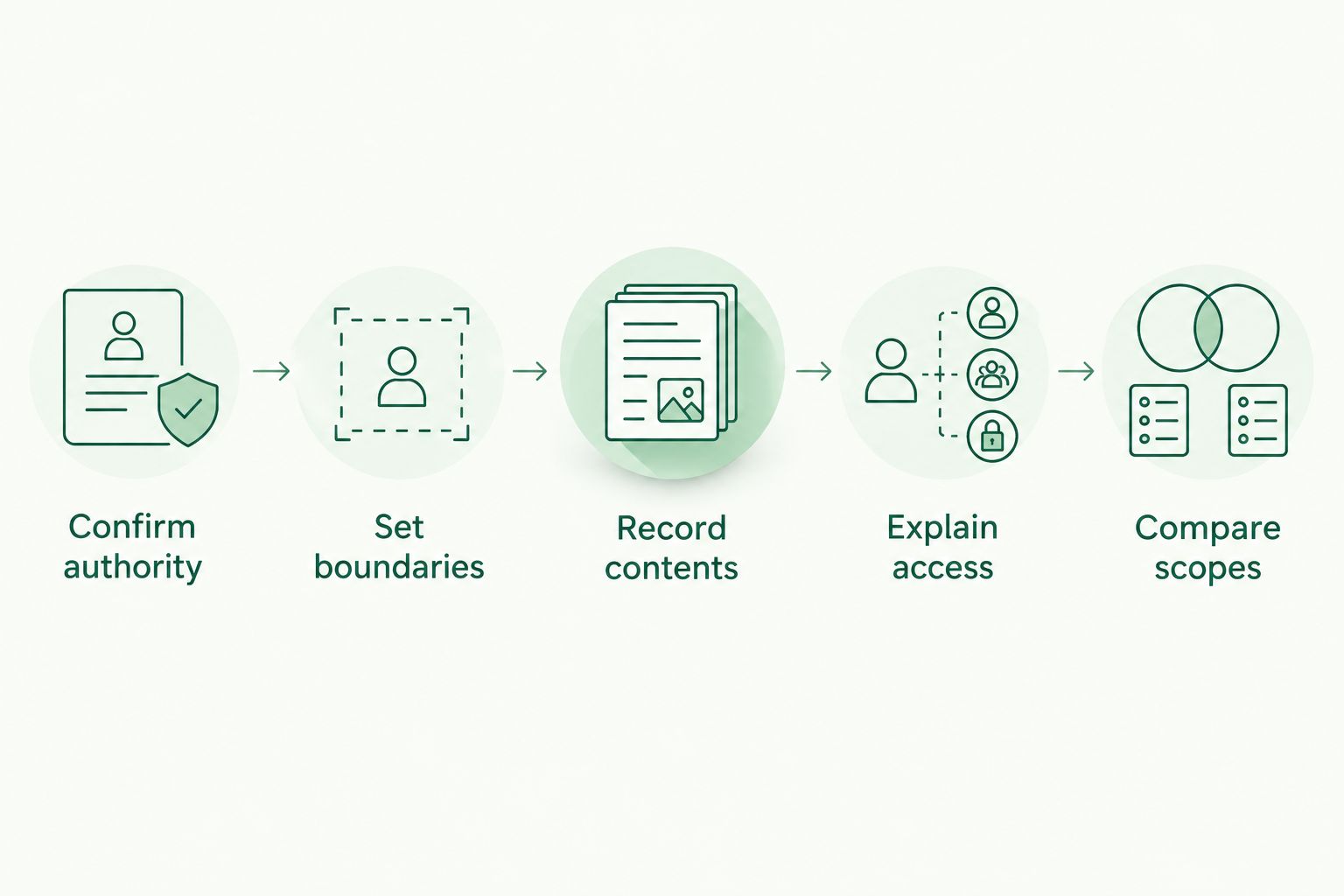
*Confirm removal authority before documenting the job and comparing scopes.*
Which eviction cleanout option should you choose?
Choose an independent property cleanout provider by default for authorized whole-unit removal. Switch to junk removal when the job is a defined pickup, or hauling when the contents are already prepared. Use specialty help for materials requiring a separate agreement.
For a 2026 selection, resolve these points before committing: what leaves, what remains, who provides access, who approves changes, and what proves completion. A provider's answer should address your actual property rather than repeat a general service description.
Expelled helps property owners and professionals connect with independent property cleanout and junk removal providers. Treat the marketplace connection as the start of provider evaluation, not confirmation of job acceptance, timing, or a complete scope.
Connect with independent providers
Use your property brief to discuss removal scope, access, and exclusions.
[Explore the marketplace](https://expelled.online/)
FAQ
What's the best type of company for an eviction cleanout?
An independent property cleanout provider is the default fit for authorized whole-unit removal. Choose a junk removal provider instead when the job is limited to a defined pickup, and confirm every included task in writing.
Does Expelled perform eviction cleanouts?
Expelled does not perform cleanouts itself; it is an online marketplace connecting homeowners, property professionals, and businesses with independent providers. Confirm the actual work, terms, and acceptance with the independent provider.
Can I remove everything after a tenant leaves?
Do not authorize removal solely because a tenant has left. Confirm possession and the applicable requirements for belongings with qualified local legal counsel before scheduling removal.
Is junk removal the same as a full property cleanout?
A defined junk pickup and a whole-property cleanout have different scopes. Confirm whether the agreement includes room-by-room collection, sorting, loading, removal, and any cleaning rather than relying on the service label.
What should I send an eviction cleanout provider?
Send an authorized removal list, photographs, access instructions, retained-item boundaries, and known material concerns. Identify who can approve changes and ask what completion record the provider will supply.
How do I compare eviction cleanout quotes in 2026?
Compare written scopes built from the same property brief. Check included tasks, exclusions, access assumptions, material acceptance, and the process for approving additional work.
Will a cleanout provider take chemicals or contaminated items?
Get explicit acceptance before including chemicals or contaminated items in a cleanout load. If the general provider excludes them, arrange a separate handling plan with an appropriate provider.
One last thing
Make an unresolved-item list, not just a removal list. Mark disputed belongings, unknown containers, and anything awaiting instructions as excluded until an authorized person resolves it. That boundary gives the provider a clear stopping point without turning a removal agreement into a decision about ownership.