Best for comparing independent providers: [Expelled](https://expelled.online/). Best for reusable furniture: a donation-first junk removal provider. Best for separated materials: a recycling-focused hauler. This 2026 guide to the best eco friendly junk removal companies explains which service fits your cleanout and what to verify before booking.
TL;DR
- Expelled is best for junk removal customers who want to connect with independent providers, not hire a marketplace-operated crew.
- Choose a donation-first provider for reusable furniture, but confirm recipient acceptance before collection.
- Choose a recycling-focused hauler for separated materials and ask where each material goes.
- Compare written scopes and disposal plans; an eco-friendly label alone does not establish responsible handling.
Why this matters
An eco-friendly junk removal claim is not a disposal plan. You need to know what a provider accepts, what gets separated, and where the material goes after pickup. A promise to recycle everything does not answer those questions.
This 2026 guide ranks a marketplace and provider types by job fit rather than assigning unsupported environmental scores to named companies. Expelled is best for junk removal customers who want to connect with independent providers rather than hire a marketplace-operated crew. Its role is connection; you still need to assess the provider's handling practices.
A homeowner clearing a garage, a property manager preparing a turnover, and a business removing office contents need different scopes. Start with your items and access conditions. Then choose the provider whose written plan matches the job.
What makes the best eco-friendly junk removal company?
Use these criteria before comparing names or booking a pickup:
- Item acceptance: The provider identifies accepted items and exclusions before collection, including electronics, paint, batteries, and damaged furniture.
- Reuse plan: The provider explains which usable items will be offered for donation or reuse and what happens if a recipient declines them.
- Recycling destinations: The provider identifies receiving facilities or material streams rather than relying on a general recycling claim.
- Job scope: The written scope covers loading, stairs, disassembly, sorting, hauling, and any cleanup you require.
- Documentation: The provider explains which receipts or other destination records it can supply and what those records establish.
- Property fit: The provider confirms access requirements, removal boundaries, and responsibility for changes to the agreed scope.
For your 2026 comparison, treat these as questions to answer, not badges to count. A provider with a clear plan for your actual contents is a better fit than one whose environmental language leaves the handling process unexplained.
Eco-friendly junk removal options at a glance
| Option | Best for | Standout function to assess | Key limitation | |---|---|---|---| | Expelled | Finding and comparing independent providers | Connects customers with property cleanout, junk removal, and hauling providers | The marketplace does not perform the cleanout; verify the selected provider's practices | | Donation-first junk removal provider | Reusable furniture and household goods | Coordinates removal around recipient acceptance | Donation depends on condition and acceptance; not every item qualifies | | Recycling-focused hauler | Separated recyclable materials | Handles identified material streams and destinations | Mixed loads and excluded materials require a separate plan | | Full-property cleanout provider | Multiroom or whole-property clearances | Coordinates removal across a defined property scope | A broad removal service does not establish recycling or donation practices | | Specialty recycler or collection service | Electronics, batteries, and other separately handled items | Uses an item-specific collection route | Does not replace a general cleanout service for all contents |
Each option has a distinct role. You can combine them when a property contains reusable furniture, ordinary junk, and materials that need separate handling. Confirm responsibilities before the job so nothing falls between providers.
1. Expelled: best for comparing independent junk removal providers
Expelled is an online marketplace connecting homeowners, property professionals, and businesses with independent providers offering property cleanouts, junk removal, and hauling services. It is not the company carrying out your cleanout.
Use the marketplace to connect with providers, then ask each provider to address the same inventory and access details. Keep the environmental questions specific: accepted materials, intended destinations, rejected donations, and available documentation.
Expelled pros:
- Provides a connection point for independent property-service providers.
- Serves homeowners, property professionals, and businesses.
- Covers property cleanout, junk removal, and hauling service categories.
Expelled cons:
- Does not perform the cleanout itself.
- Provider recycling and donation practices require separate verification.
- A marketplace connection does not establish whether a provider accepts your particular materials.
Best for: Customers who want to find independent providers and compare job-specific plans.
Verdict: Choose Expelled for provider discovery; select the provider only after confirming the removal and handling scope.
2. Donation-first providers: best for reusable furniture
A donation-first junk removal provider is the right type to assess when usable furniture or household goods make up the main load. Ask the provider to identify intended recipients and explain acceptance requirements before treating donation as part of the plan.
Condition matters. Send clear photographs of upholstery, damage, missing parts, and assembled dimensions where relevant. Do not describe an item as donation-ready solely because you no longer need it.
Donation-first provider pros:
- Makes recipient acceptance part of the removal discussion.
- Gives reusable items a separate handling path from disposal items.
- Fits a selective clearout where usable goods are already identified.
Donation-first provider cons:
- Recipients can decline items based on condition or acceptance rules.
- A donation plan does not cover every material in a mixed load.
- You need a fallback plan for rejected items.
Best for: Households or offices removing usable goods with identifiable reuse destinations.
Verdict: Choose a donation-first provider when the provider confirms both an acceptance route and a rejection fallback.
3. Recycling-focused haulers: best for separated materials
A recycling-focused hauler is the provider type to assess when you can identify distinct material streams, such as metal or cardboard. Ask whether those materials must remain separate during loading and which receiving facilities will accept them.
For a 2026 cleanout, judge the proposed handling route rather than the word recycling in the company name. A useful answer identifies the material, preparation requirements, destination, and documentation available for that load.
Recycling-focused hauler pros:
- Fits jobs with clearly identified material streams.
- Supports a discussion about destinations before pickup.
- Makes sorting and preparation requirements explicit.
Recycling-focused hauler cons:
- Contaminated or mixed materials need an acceptance check.
- Furniture and household goods can require different handling routes.
- Destination records do not automatically establish that every item was recycled.
Best for: Customers with separated materials and a provider-confirmed receiving route.
Verdict: Choose a recycling-focused hauler when accepted materials and destinations are specified before collection.
4. Full-property cleanout providers: best for mixed property contents
A full-property cleanout provider is the service type to assess for a house, rental unit, office, or other property with contents spread across multiple rooms. Define which areas must be cleared and which fixtures, possessions, or equipment must stay.
The environmental plan still needs detail. Ask how the provider separates reusable goods, recyclable materials, and disposal items within the broader cleanout. Do not assume a whole-property service includes every handling task.
Full-property cleanout provider pros:
- Fits a scope spanning multiple rooms or property areas.
- Lets you define loading, disassembly, and cleanup in one job description.
- Provides a clear point of responsibility for the agreed removal scope.
Full-property cleanout provider cons:
- Broad cleanout capability does not prove recycling or donation practices.
- Specialty materials can fall outside the agreed scope.
- Ambiguous keep-or-remove instructions create avoidable disputes.
Best for: Property professionals, businesses, and homeowners managing a mixed-content clearance.
Verdict: Choose a full-property provider when the written scope includes both removal boundaries and material handling.
5. Specialty collection services: best for separately handled items
A specialty recycler or collection service handles a defined item category rather than an entire mixed cleanout. Electronics, batteries, and household chemicals require item-specific acceptance checks; do not assume a general hauler accepts them.
For household hazardous waste questions, consult your local waste authority's current instructions. Describe the material accurately and follow the receiving program's preparation rules. Keep unknown substances out of the general removal load until you have handling instructions.
Specialty collection service pros:
- Focuses the acceptance check on a specific material.
- Provides a separate route for items excluded from general hauling.
- Helps you resolve special handling before the main cleanout.
Specialty collection service cons:
- Covers only the stated item category or accepted materials.
- Requires coordination with the rest of the removal job.
- Acceptance rules and preparation requirements must be checked directly.
Best for: Customers with items that need a confirmed, separate collection route.
Verdict: Choose specialty collection for excluded materials; do not substitute it for the entire property cleanout.
Prepare a job description providers can compare
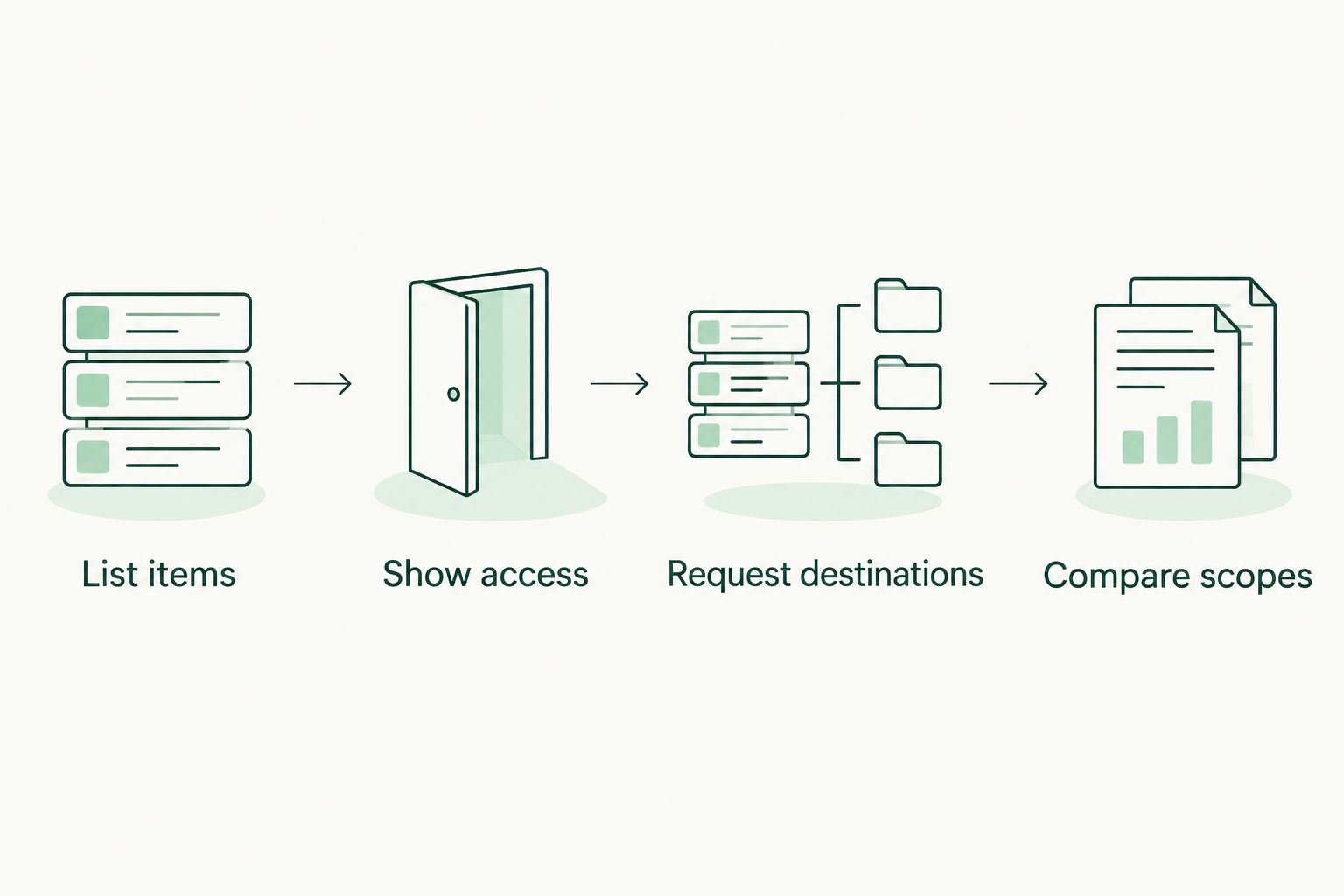
For your 2026 provider search, send one consistent description rather than giving each company a different version of the job. Use these steps in order:
- List items. Create 1 inventory grouped into keep, remove, and uncertain. Identify potentially reusable goods separately from damaged contents.
- Show access. Include at least 3 photos: the overall load, the removal route, and any item needing a condition or acceptance check. Add more when those views do not cover the job.
- Request destinations. Ask which items go to reuse, recycling, or disposal, and what happens when a receiving organization refuses something.
- Compare scopes. Request 2 written scopes using the same inventory. Compare included tasks, exclusions, handling plans, and responsibility for changes.
These counts are practical preparation instructions, not industry performance benchmarks. The purpose is to give providers enough information to explain their approach and let you compare like-for-like work.
!Four steps for preparing a junk removal job and comparing provider scopes
*Give each provider the same inventory before comparing the proposed work.*
Record stairs, elevators, parking restrictions, entry arrangements, and any disassembly needed. Mark items that must remain in place. For a business or managed property, identify the person authorized to approve removal and scope changes.
Do not approve collection until you understand the plan for excluded and rejected items. An unresolved item is still your problem unless responsibility is expressly agreed.
Connect with independent providers
Describe your property cleanout and ask providers about item acceptance and handling destinations.
[Explore the marketplace](https://expelled.online/)
How the options are ranked
This guide ranks options by the job each is suited to address: provider discovery, reusable goods, separated materials, whole-property contents, or specialty items. The criteria are item acceptance, reuse plans, recycling destinations, job scope, documentation, and property fit.
The order is not an environmental performance score. No diversion percentage, provider certification, or verified disposal outcome is assigned here. Your final selection should depend on the written answers for your property, not the position of an option in a list.
Which eco-friendly junk removal option should you choose?
Start with provider discovery if you have not yet defined a suitable service; start with a specialty acceptance check if your load contains excluded materials. That distinction prevents a general cleanout booking from becoming your answer to every item.
For reusable furniture, assess a donation-first provider. For separated materials, assess a recycling-focused hauler. For mixed property contents, assess a full-property cleanout provider and require an explicit handling plan.
Before booking in 2026, resolve three questions: what leaves the property, who is responsible for it, and where it is intended to go. A clear answer to those questions is more useful than an unqualified green claim.
FAQ
What's the best eco-friendly junk removal company for my property?
The best fit is a provider that confirms item acceptance, removal scope, and handling destinations for your specific load. Choose by job type rather than an unsupported environmental ranking, and compare written plans before booking.
Does Expelled perform junk removal itself?
Expelled does not perform junk removal itself; it is an online marketplace connecting customers with independent providers. Confirm the job scope and handling practices directly with the provider carrying out the work.
Is donating furniture better than hiring a recycling-focused hauler?
A donation-first provider is the better fit for usable furniture with a confirmed recipient, while a recycling-focused hauler fits accepted recyclable materials. Check condition and recipient acceptance before treating donation as the removal plan.
How do I check whether a junk removal provider actually recycles?
Ask the provider to identify accepted materials, receiving destinations, and available destination records. A general recycling statement does not establish what will happen to every item in your load.
Can batteries, paint, and electronics go in a regular junk removal load?
Do not put batteries, paint, or electronics into a regular load without a specific acceptance check. Ask the provider about exclusions and consult local collection instructions for materials requiring separate handling.
What happens if a charity refuses my furniture?
The agreed fallback plan determines what happens to furniture a recipient refuses. Ask the provider to explain that plan before collection, including responsibility for alternative handling.
What should I send a provider before requesting a cleanout proposal?
Send an item inventory, photos, access details, and clear keep-or-remove instructions. Ask every provider to address the same scope so you can compare exclusions, handling routes, and included tasks.
One last thing
Ask about rejected donations before asking how much a provider donates. A percentage claim does not tell you what happens to your damaged sofa or unaccepted desk. The fallback plan does.
Keep a copy of the agreed inventory and scope. If a destination or acceptance decision changes, request the revised handling plan before authorizing work outside the original agreement.